Physical Diagnosis PDX
Library
Cardiology Atlas Tutorial
Neurology Atlas Tutorial
Rheumatology Atlas Tutorial
Endocrinology Atlas Tutorial
Gastroenterology Atlas Tutorial
Pulmonology Atlas Tutorial
Infectious Disease Atlas Tutorial
Hematology-Oncology Atlas Tutorial
Nephrology Atlas Tutorial
Nails Atlas Tutorial
Hereditary Atlas Tutorial
Miscellaneous Atlas Tutorial
Cases Lectures Quizzes About
Library

Cardiology

Atlas Tutorial

Neurology

Atlas Tutorial

Rheumatology

Atlas Tutorial

Endocrinology

Atlas Tutorial

Gastroenterology

Atlas Tutorial

Pulmonology

Atlas Tutorial

Infectious Disease

Atlas Tutorial

Hematology-Oncology

Atlas Tutorial

Nephrology

Atlas Tutorial

Nails

Atlas Tutorial

Hereditary

Atlas Tutorial

Miscellaneous

Atlas Tutorial
Cases Lectures Quizzes About
  1. Home
  2. Cases
  3. Polyuria and Polydipsia

dka2.png

File is not under priv/media.
Case 35 Endocrinology

Polyuria and Polydipsia

Work it one clue at a time. The diagnosis stays hidden until you reveal it.

Clue 1

18 M presents with polyuria, polydipsia, abdominal pain, and intense vomiting.  

RR is 28 breaths per minute. ABG: pH is 7.29, PaCO2 is 26 mm Hg, HCO3− is 12.

What acid/base disturbance(s) is present and what is the underlying cause?

Clue 2

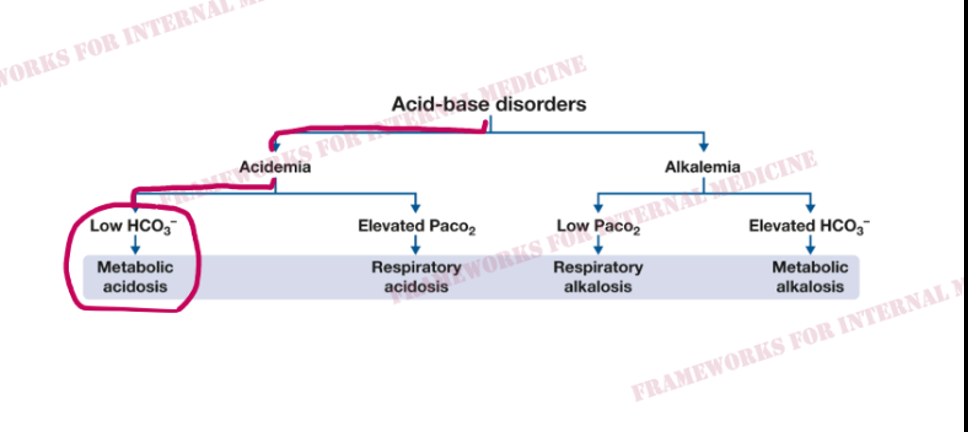
Measurement of the pH of blood (from ABG) is the first diagnostic step in determining the nature of an acid-base disturbance. Acidemia refers to pH < 7.35; alkalemia refers to pH > 7.45.  

With a pH of 7.29, our patient is acidemic.

Clue 3

The suffix -emia refers to the acid-base state of blood (either acidic or alkaline), whereas the suffix -osis refers to system-based disorders that affect the acid-base state of blood.  

Although there can only be one acid-base state of blood at a given time (either acidemia or alkalemia), multiple acid-base disorders can exist simultaneously.

Serum HCO3− (from the BMP or ABG) and PaCO2 (from the ABG) are necessary to identify the underlying disorder(s) involved in an acid-base disturbance. 

Primary metabolic acidosis is characterized by the combination of acidemia and low serum HCO3−, as in this case (recall HCO3− is 12).

Reveal next

Teaching physical diagnosis through a library of real clinical findings.

  • About
  • Resources
  • Privacy
  • Acknowledgments