Pulmonology
Chest, breath sounds, and respiratory exam. 13 findings
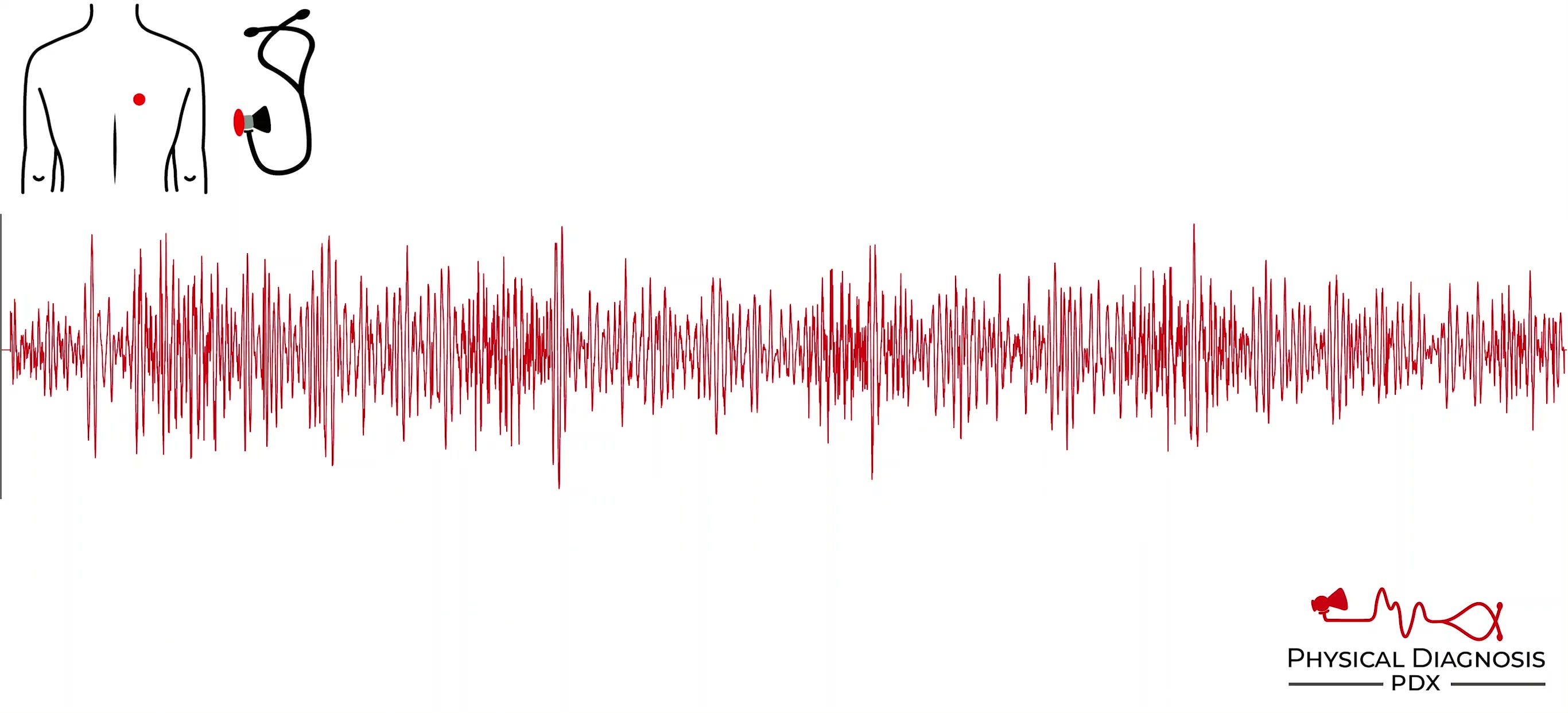
Bronchial Breath Sounds
2 patients · 4 clips
Bronchial (ie, tubular) breath sounds are loud in both inhalation and exhalation, and have a tubular quality – imagine the sound of Darth Vader breathing. There may be a gap between inhalation and exhalation. Listening o
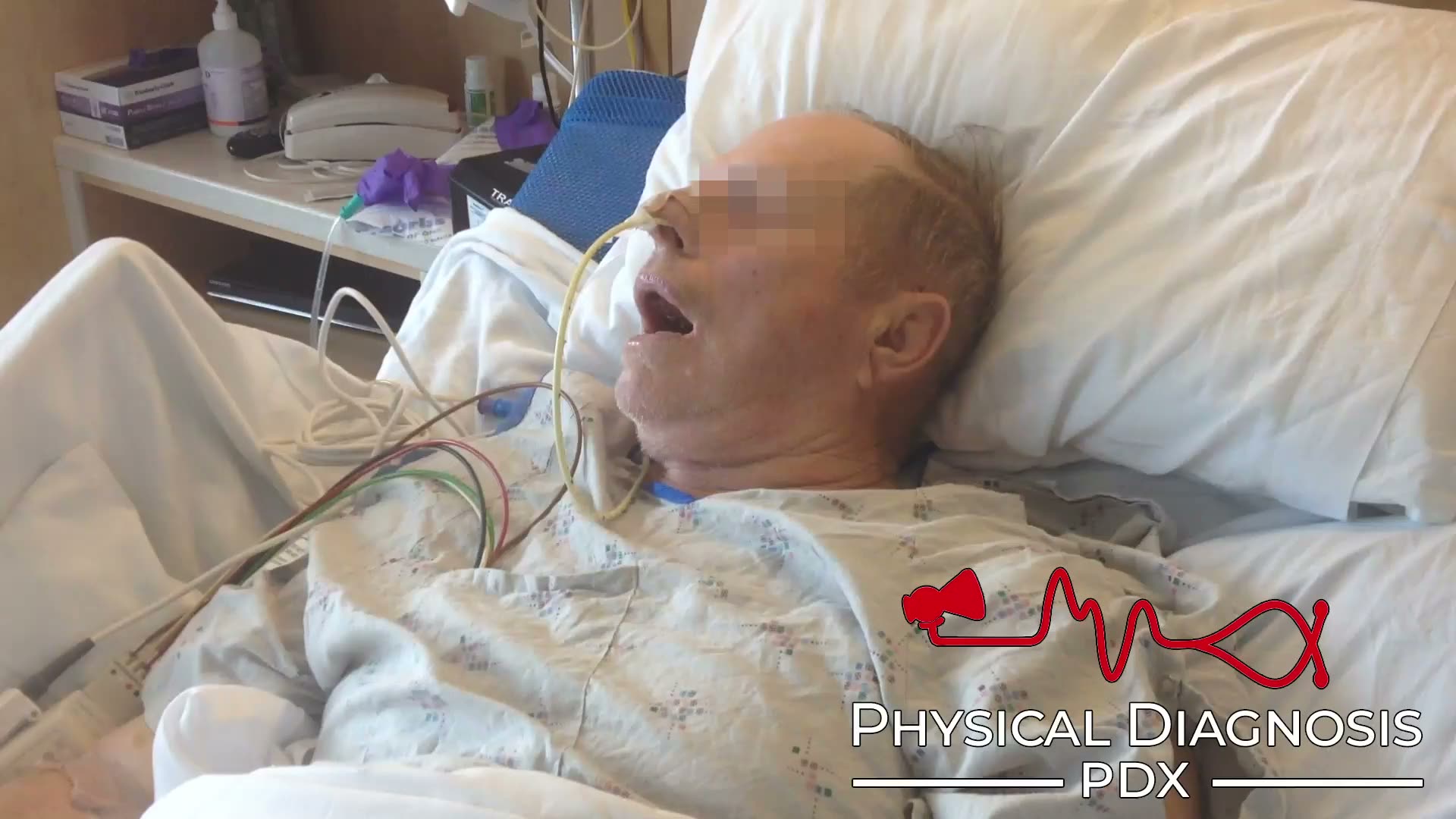
Cheyne-Stokes Respirations
3 patients · 3 clips
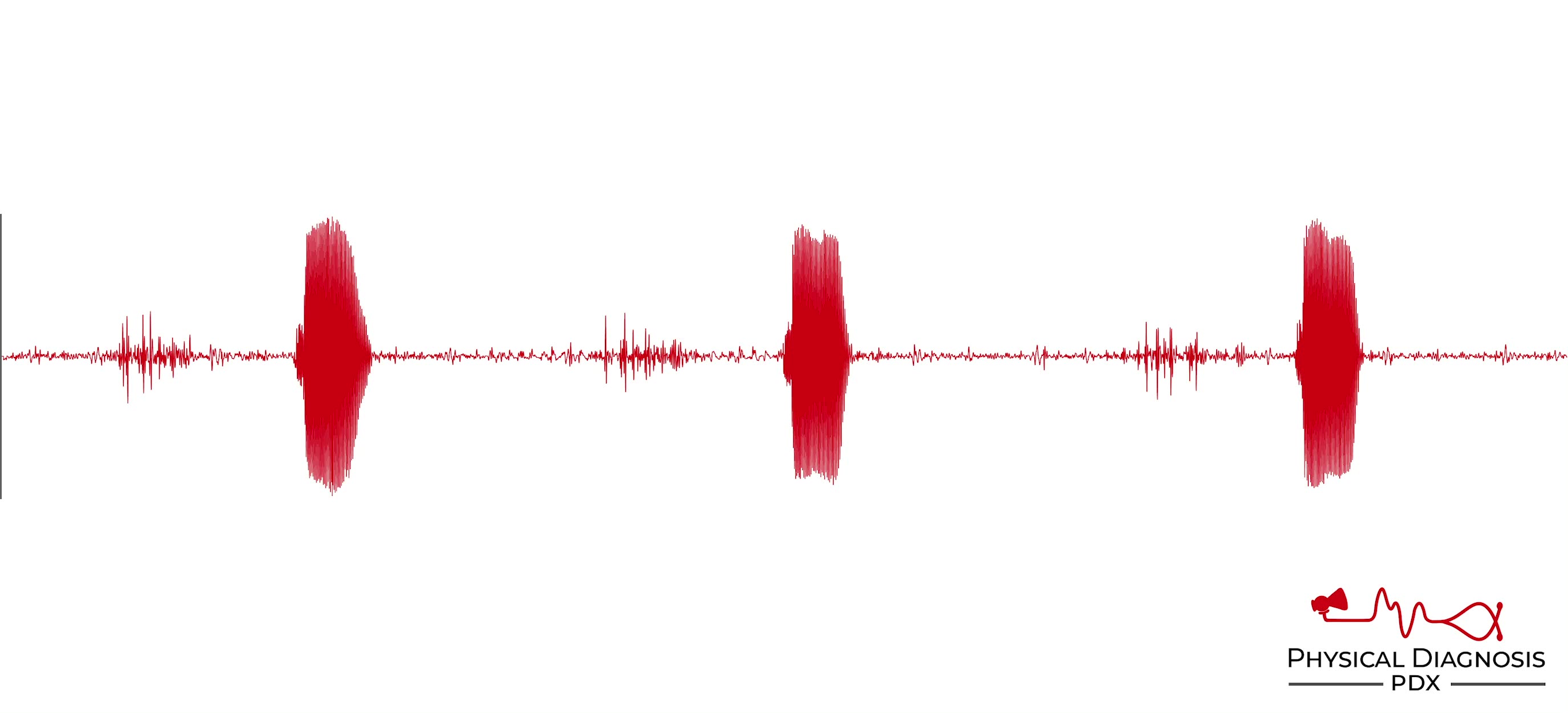
- Cheyne- Stokes respirations are characterized by periods of increasing hyperpnea that peak, then slow to an apneic period, followed by resumption of breathing and hyperpnea. - Seen in patients with severe heart failure
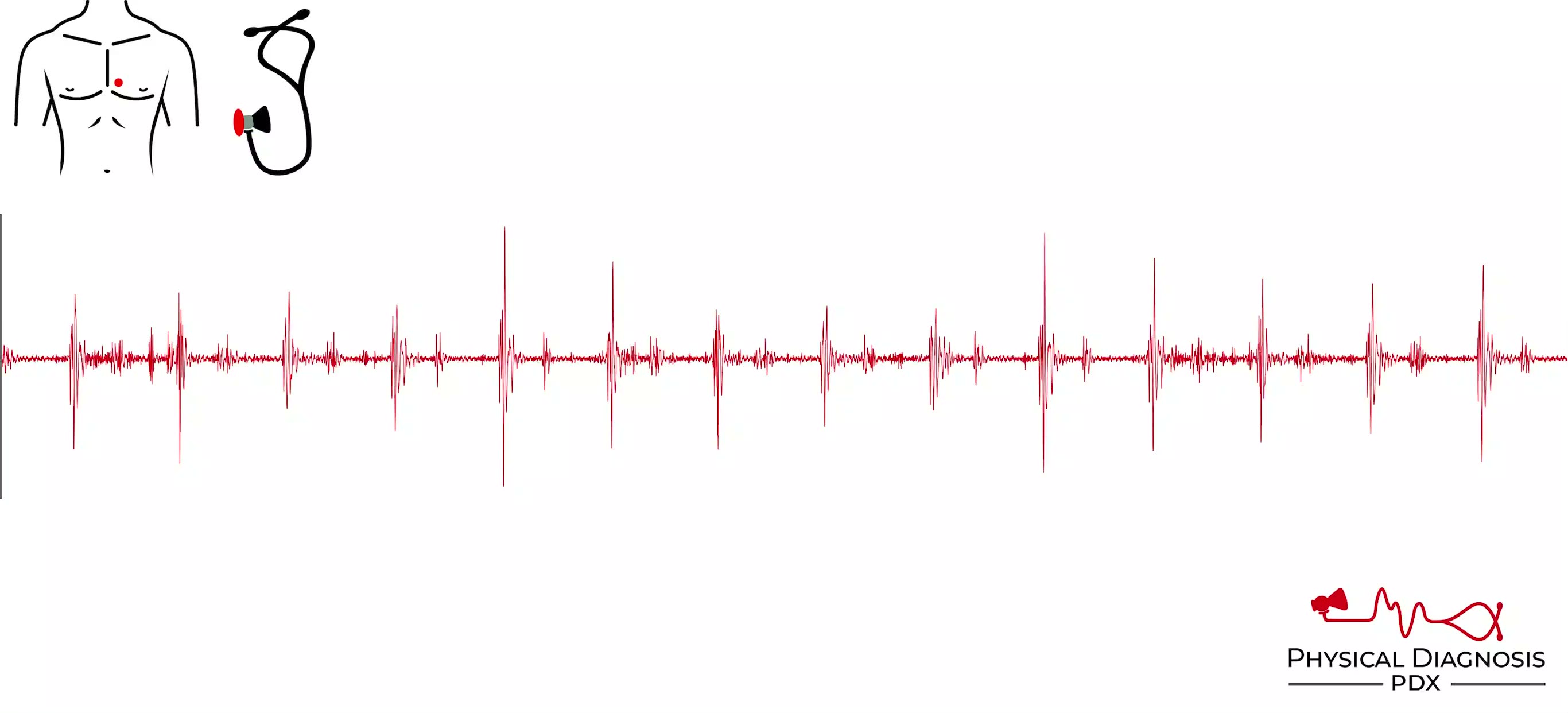
Pleural Friction Rub
5 patients · 10 clips
Heard when there is pleural inflammation, as in pneumonia or pulmonary infarction. It sounds like someone rubbing their hand on a wet balloon, or sometimes it sounds like a boot crunching on fresh snow. Pulmonology Tutor
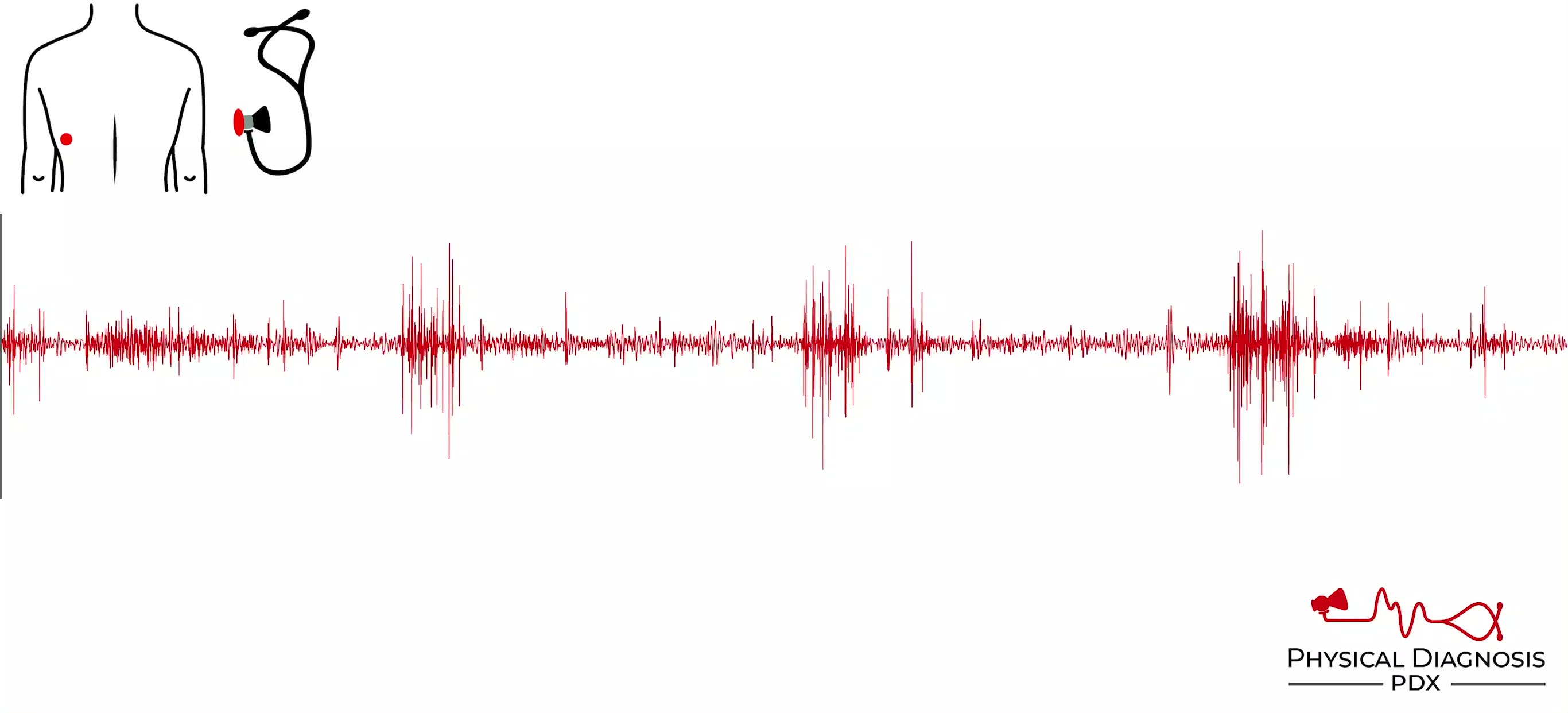
Bronchophony
1 patients · 1 clips
Bronchophony is the finding of increased volume (loudness) of speech in a focal area of pneumonia. Pulmonology Tutorial Patient 1: This is a middle-aged man with community-acquired pneumonia. This patient also has crackl
Clubbing
7 patients · 17 clips
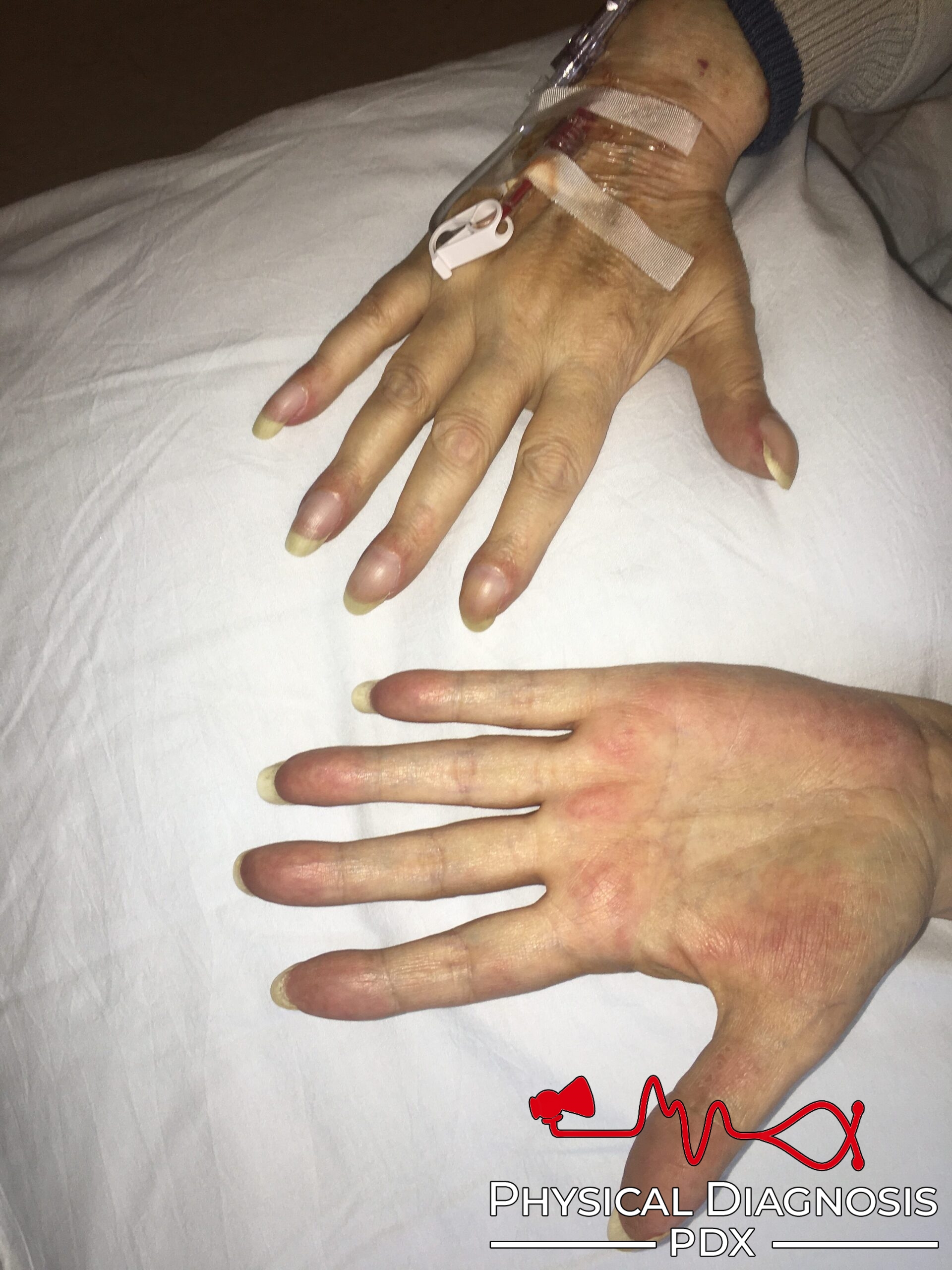
Clubbing of the digits is a cardinal sign of pulmonary disease. It is the finding of increased vascular connective tissue in the distal segments of the digits, which results in the characteristic enlargement of the tips
Crackles (Rales)
10 patients · 47 clips
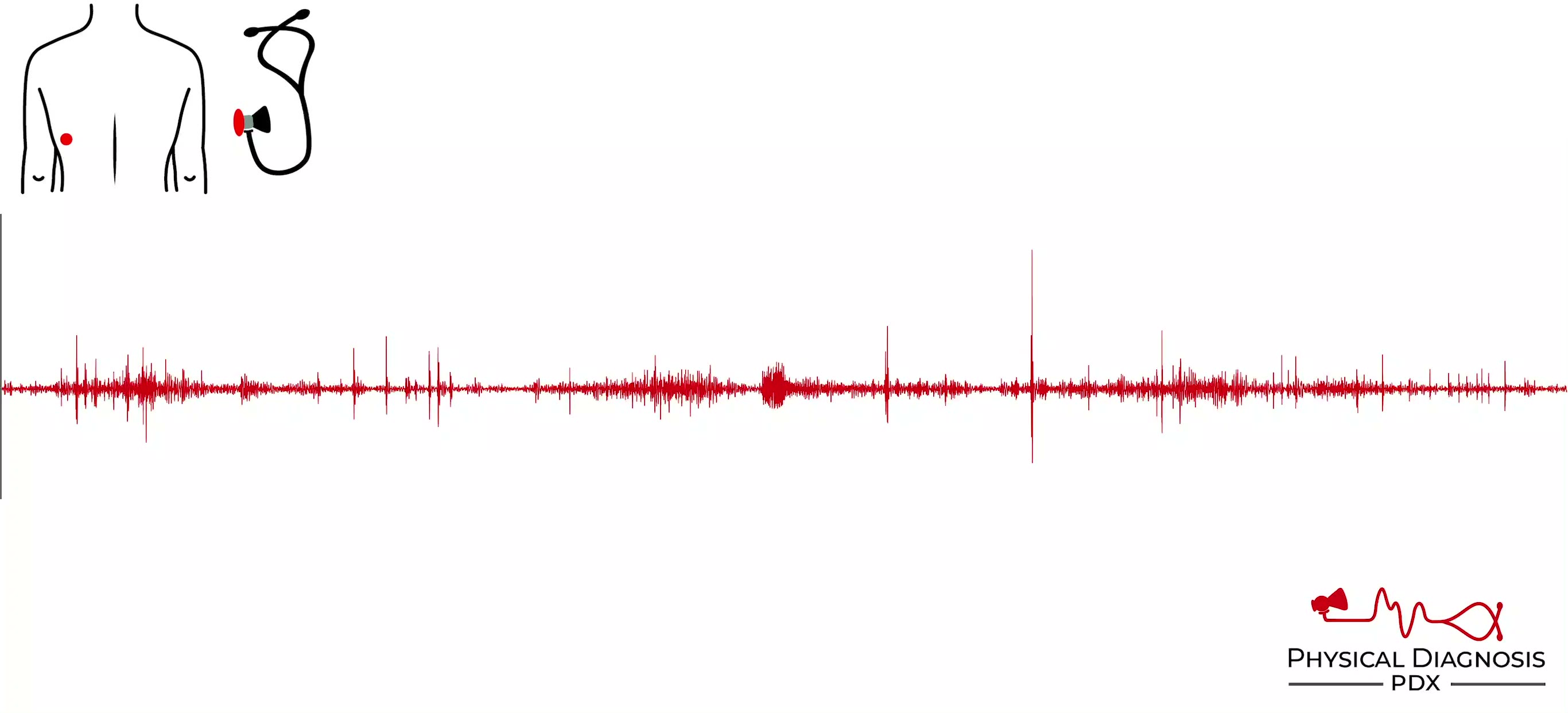
Crackles are discontinuous popping sounds that are heard primarily during inspiration. Contrary to popular opinion, they are not from the popping open of alveoli. In the larger airways they are thought to be caused by se
Cyanosis
1 patients · 4 clips
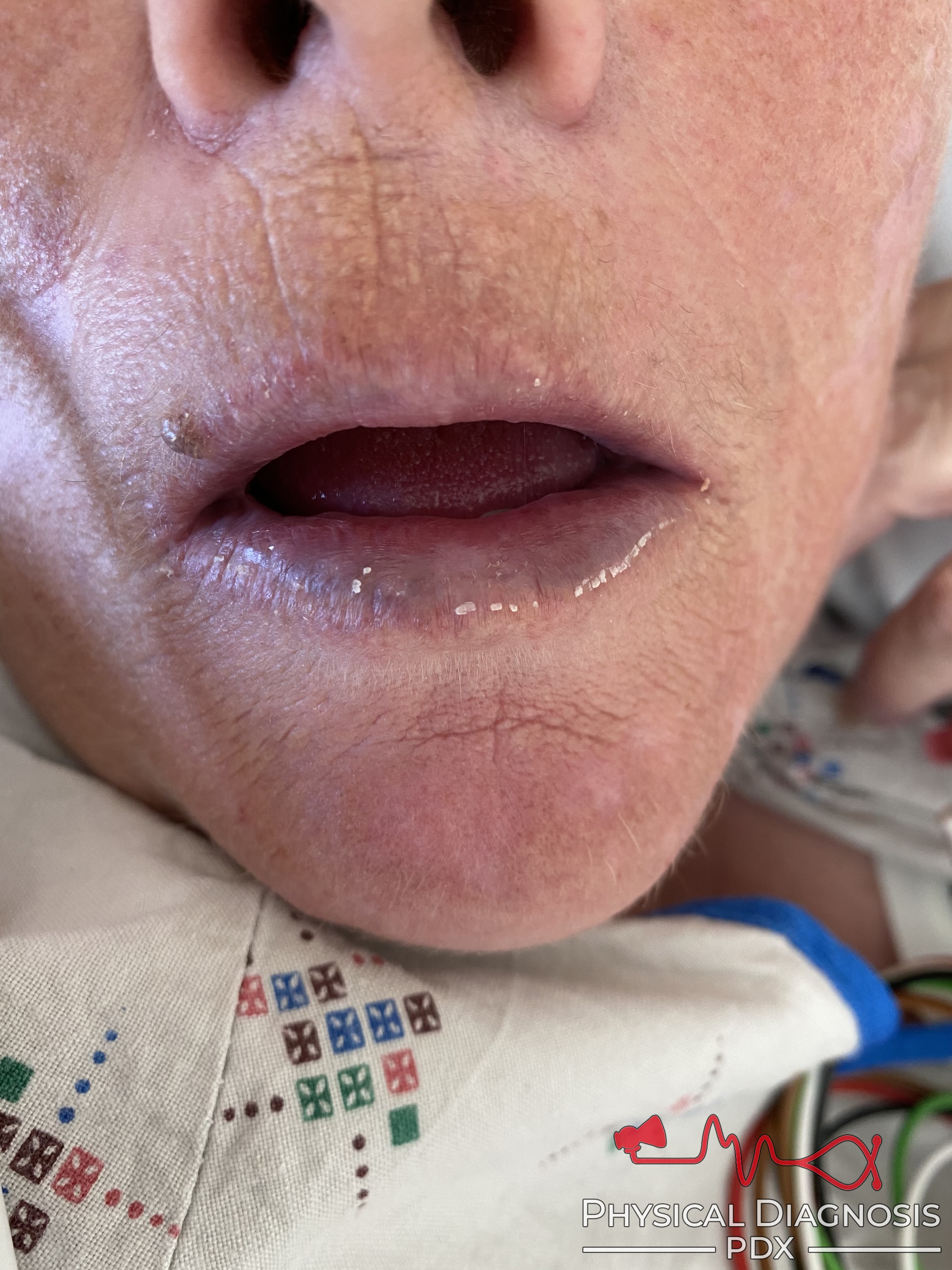
Patient 1: This is a middle-aged man with a congenital ventricular septal defect that was never corrected, ultimately resulting in Eisenmenger’s syndrome with cyanosis and massive digital clubbing.
Egophony
3 patients · 5 clips
Egophony is the finding that when the patient says E it sounds like A or “ah”, like the bleating of a goat. The mechanism is thought to be that the consolidated lung better transmits low frequency sounds and filters out
Lung Expansion Test
1 patients · 2 clips
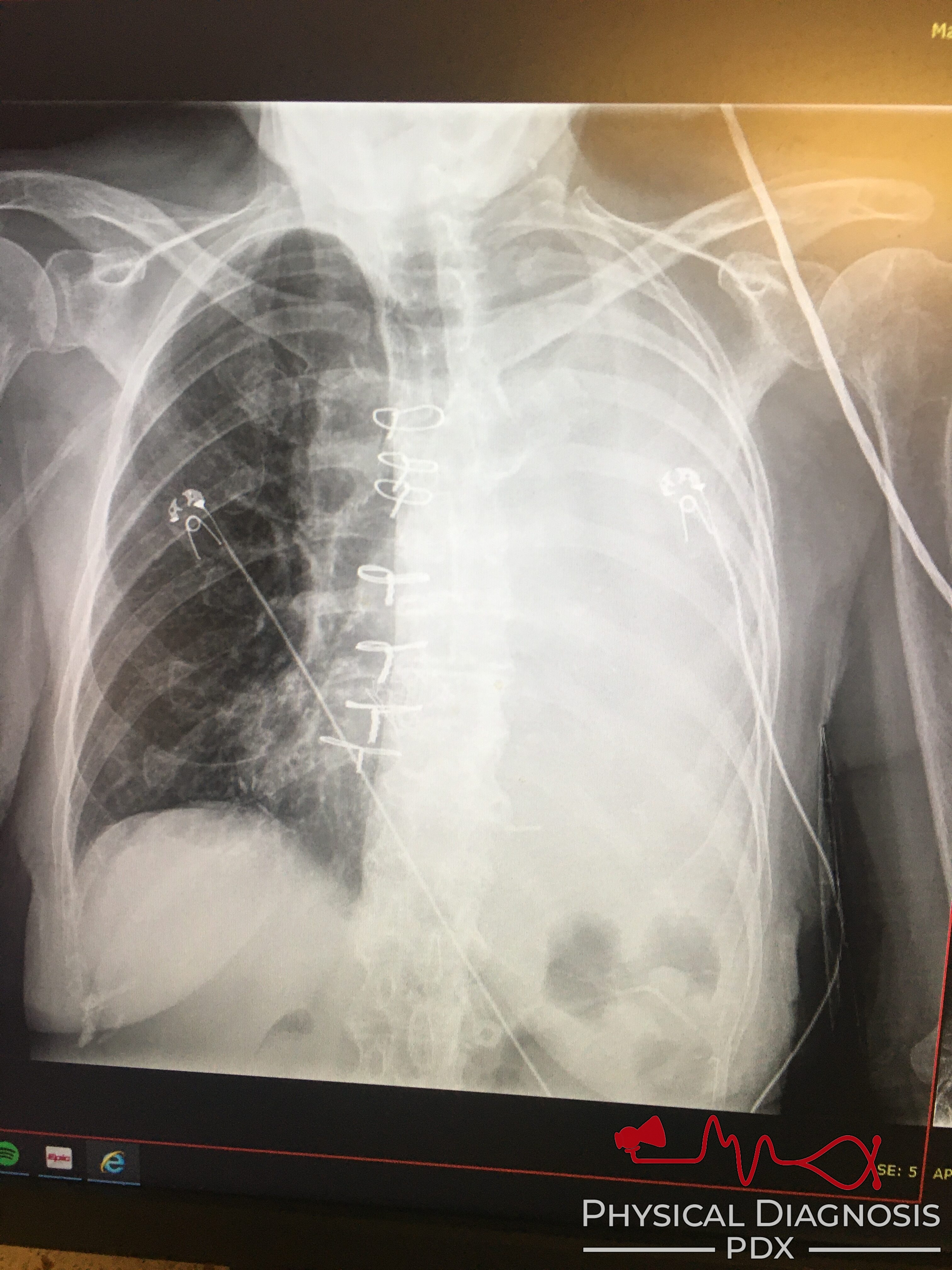
Patient 1: This patient is a middle aged woman who presented with chronic cough. The finding is asymmetric chest expansion on inspiration. Her CXR shows a complete white out of her left lung. She had a large, malignant p
Inspiratory Squeak
1 patients · 1 clips
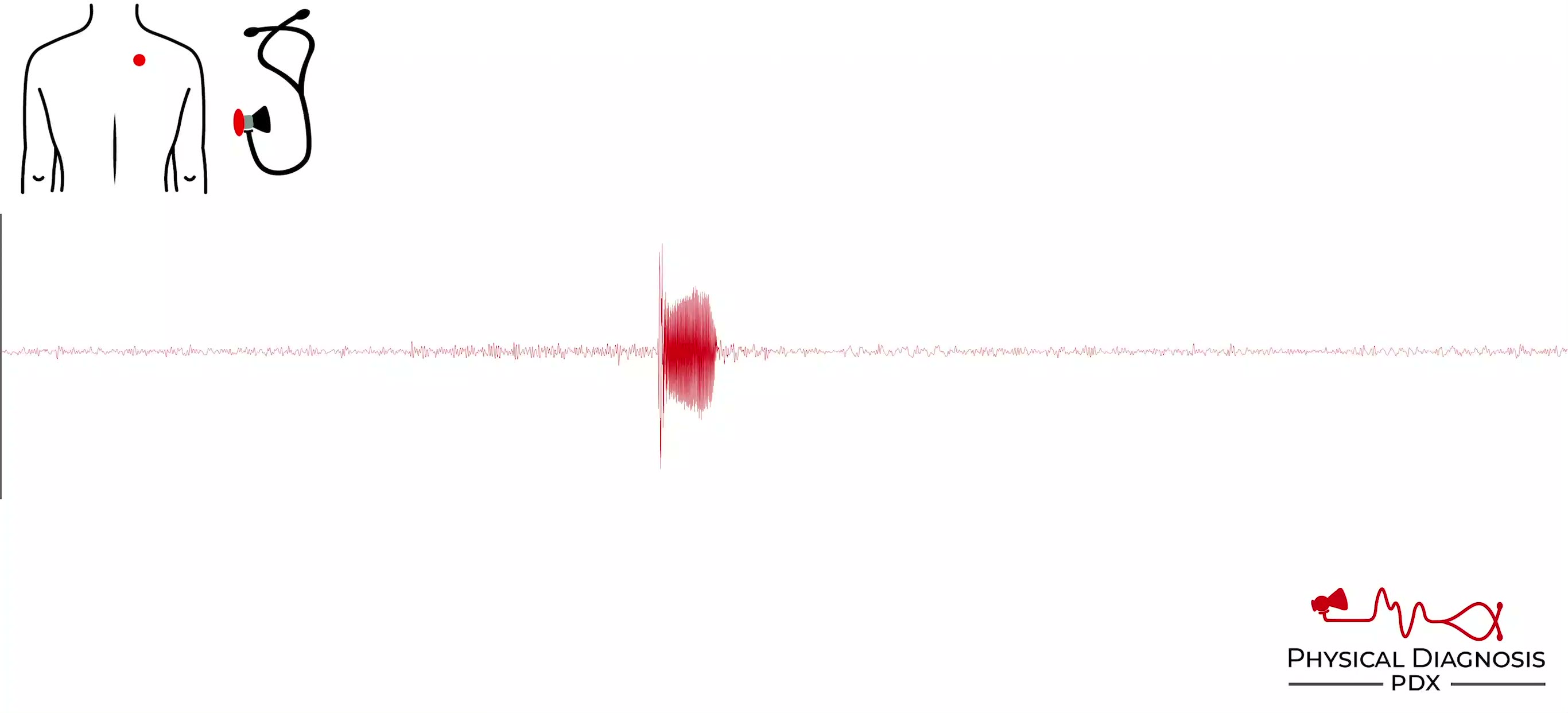
This is a rare sound in late inspiration, that is short and musical. Heard in some types of interstitial lung disease. Pulmonology Tutorial Patient 1: This patient has interstitial lung disease. **Inspiratory Squeak**
Rhonchi
1 patients · 1 clips
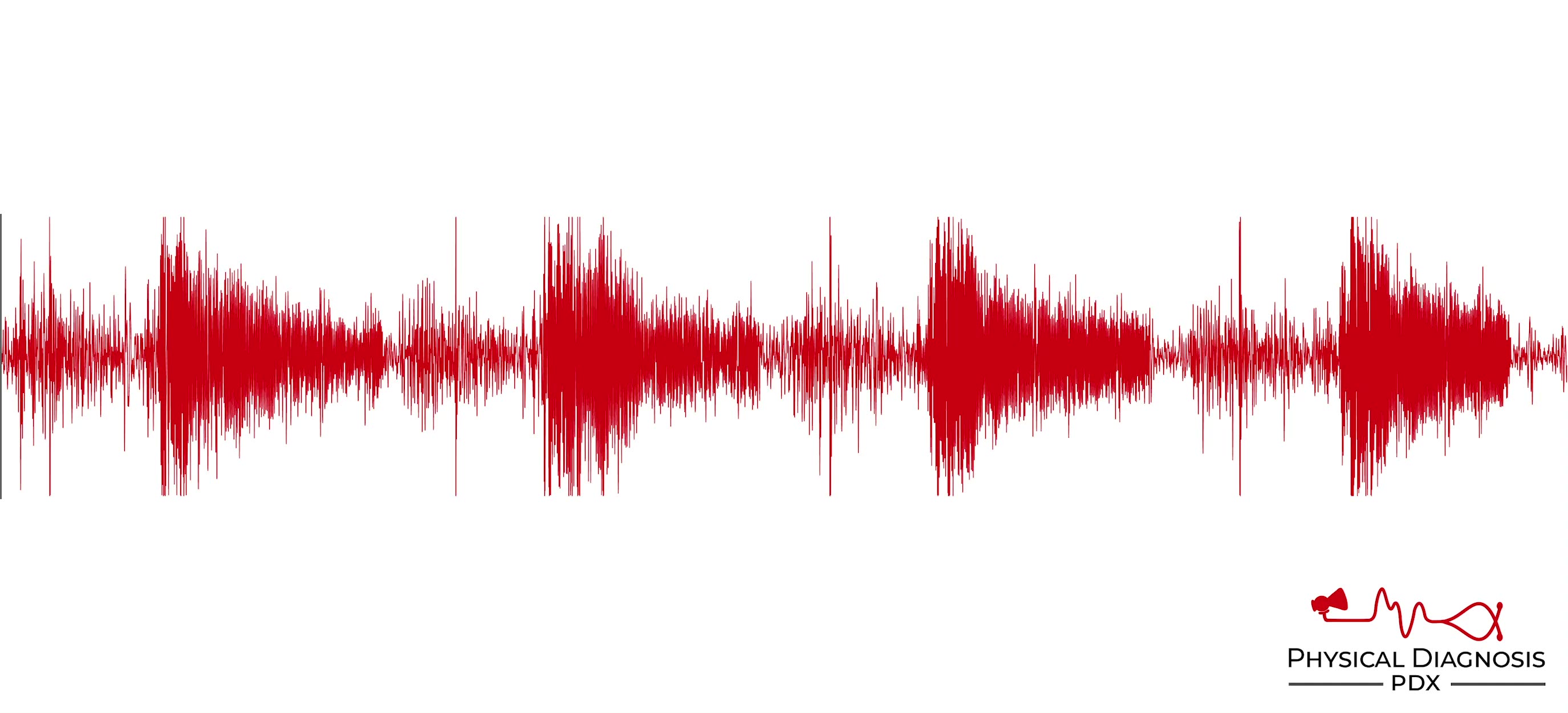
Continuous, musical sound that is primarily heard in expiration. Rhonchi are low pitched. Caused by vibrations in narrowed airways and heard in asthma, reactive airways disease, and occasionally in heart failure (called
Vesicular Breath Sounds
3 patients · 6 clips
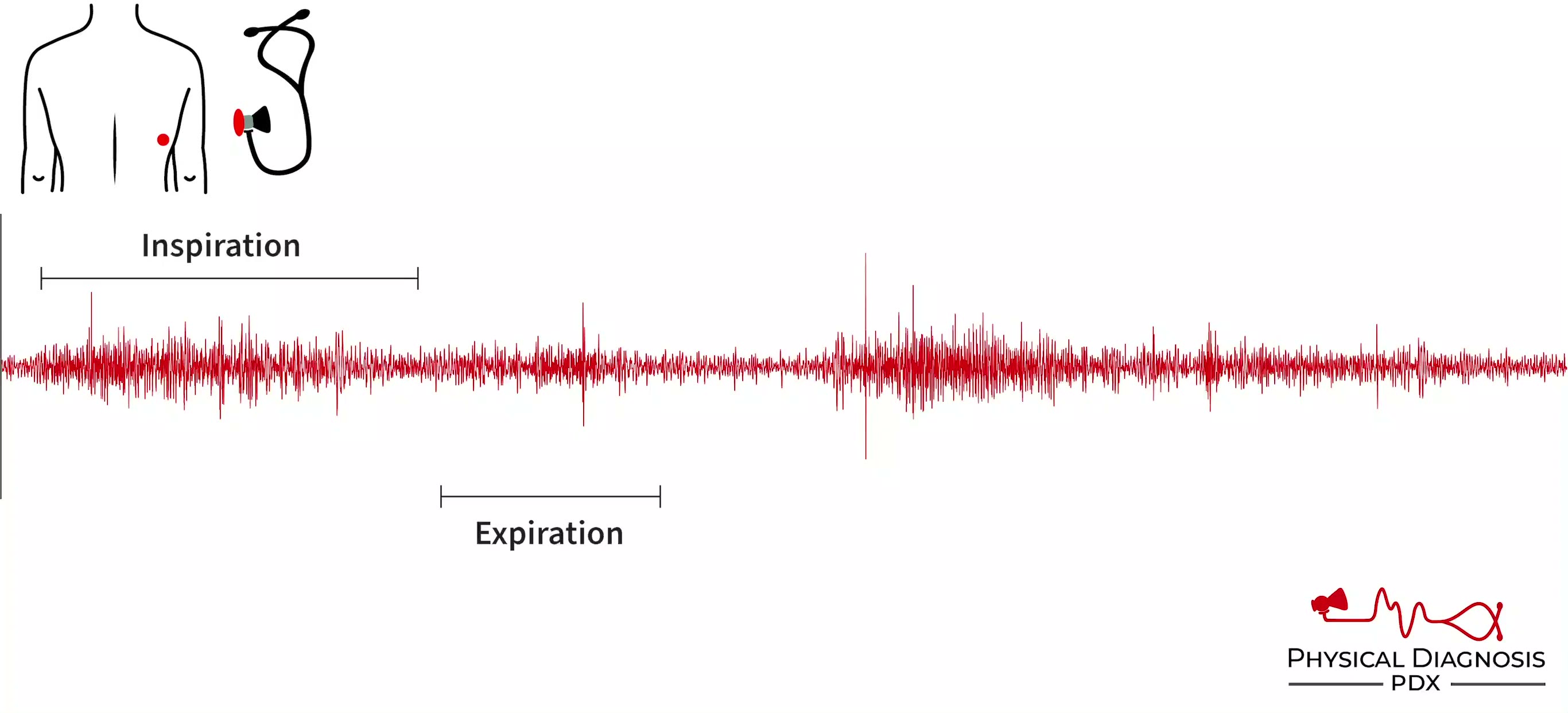
Vesicular breath sounds are what one hears when listening over normal, healthy lungs. The inspiratory phase is louder and longer (about a 3:1 ratio) than the expiratory phase, and there is no gap between the two phases.
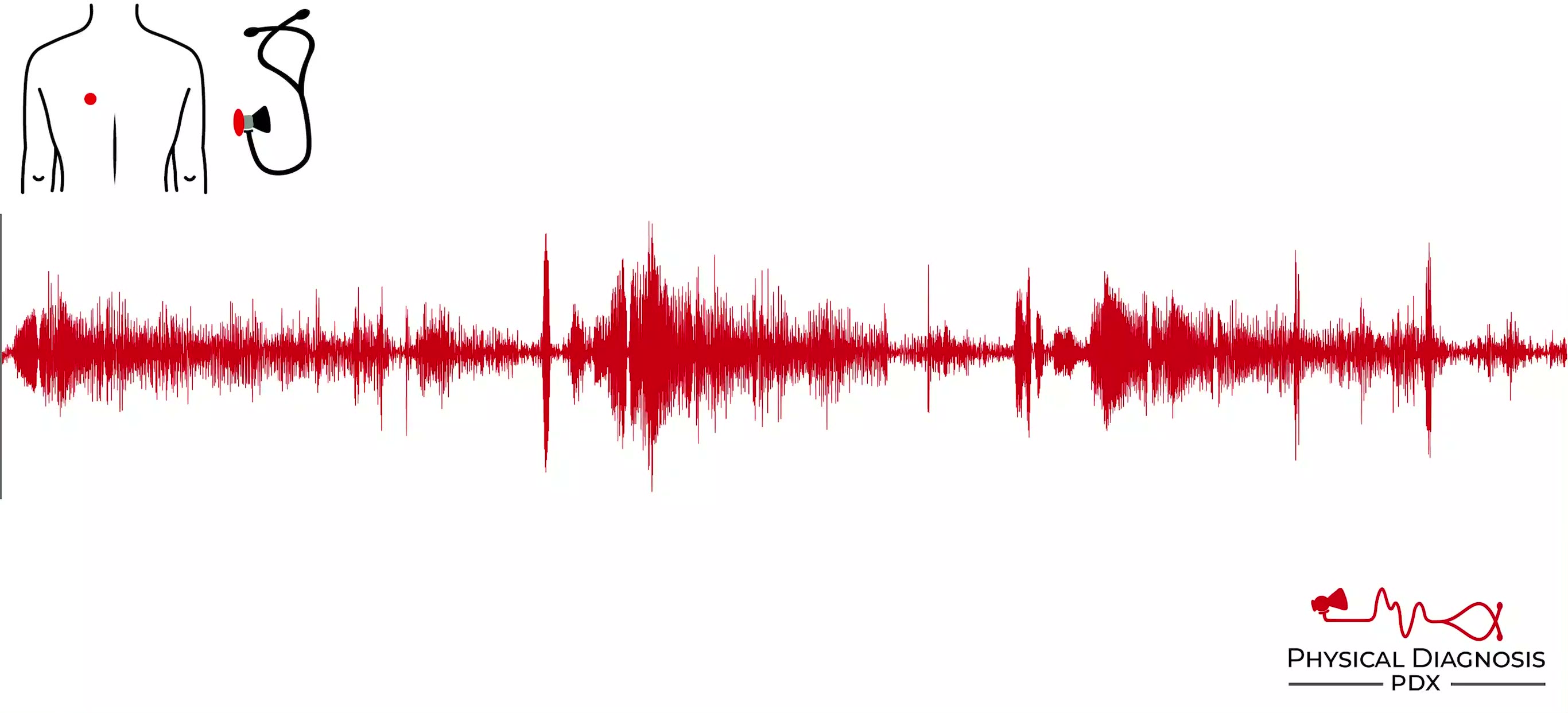
Wheezes
1 patients · 1 clips
These are continuous, musical sounds that are primarily heard in expiration – wheezes are high pitched and rhonchi are low pitched. They are both thought to be caused by vibrations in narrowed airways and are heard in as