Physical Diagnosis PDX
Library
Cardiology Atlas Tutorial
Neurology Atlas Tutorial
Rheumatology Atlas Tutorial
Endocrinology Atlas Tutorial
Gastroenterology Atlas Tutorial
Pulmonology Atlas Tutorial
Infectious Disease Atlas Tutorial
Hematology-Oncology Atlas Tutorial
Nephrology Atlas Tutorial
Nails Atlas Tutorial
Hereditary Atlas Tutorial
Miscellaneous Atlas Tutorial
Cases Lectures Quizzes About
Library

Cardiology

Atlas Tutorial

Neurology

Atlas Tutorial

Rheumatology

Atlas Tutorial

Endocrinology

Atlas Tutorial

Gastroenterology

Atlas Tutorial

Pulmonology

Atlas Tutorial

Infectious Disease

Atlas Tutorial

Hematology-Oncology

Atlas Tutorial

Nephrology

Atlas Tutorial

Nails

Atlas Tutorial

Hereditary

Atlas Tutorial

Miscellaneous

Atlas Tutorial
Cases Lectures Quizzes About
  1. Home
  2. Cardiology
  3. Aortic Regurgitation

vimeo-463370549--AorticRegurgitation_6.mp4

File is not under priv/media.

Patient 1 Patient 2 Patient 3 Patient 4 Patient 5 Patient 6 Patient 7 Patient 8 Patient 9 Patient 10 Patient 11 Patient 12 Patient 13
Clip 1 Clip 2
Annotated Compare
Previous patient Next patient Previous clip
Cardiology Murmurs

Aortic Regurgitation

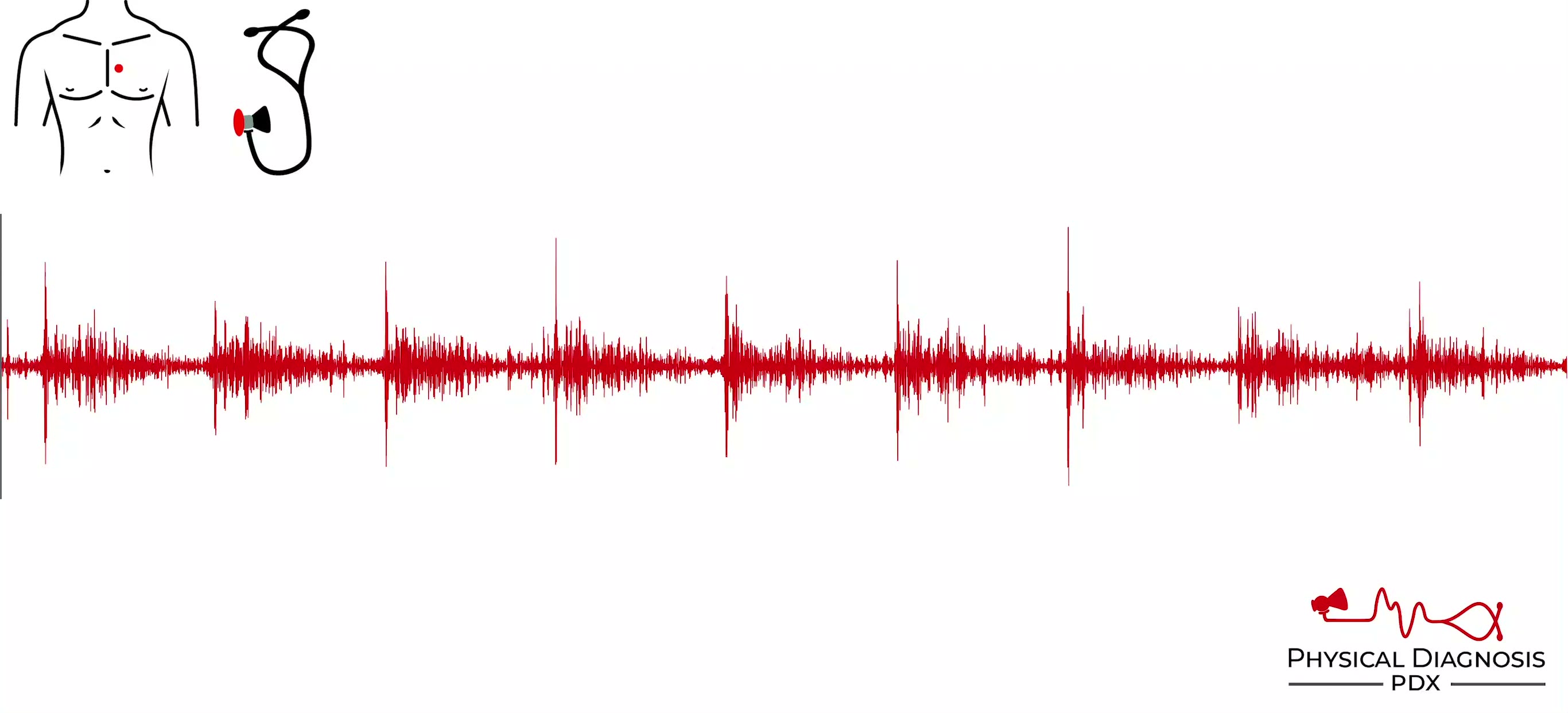
  • Soft, decrescendo murmur that starts right at S2 and trails off (turbulence is highest in early diastole when the pressure gradient between the aorta and LV is highest).
  • Murmur may be best heard with the patient leaning forward, holding their breath after a full exhalation.
  • This murmur is classically associated with a wide pulse pressure, due to the larger than normal cardiac output (blood coming from both the left atrium and the blood leaking back from the aorta). The diastolic pressure is lower as blood is running off in both directions, and the vasculature peripherally is open to accommodate the increased forward flow (autoregulation). This causes the classic water hammer pulse, which can be felt in the radial pulse, and the Corrigan’s pulse (a large, bounding carotid pulse)

Card Tutorial

Patient 2

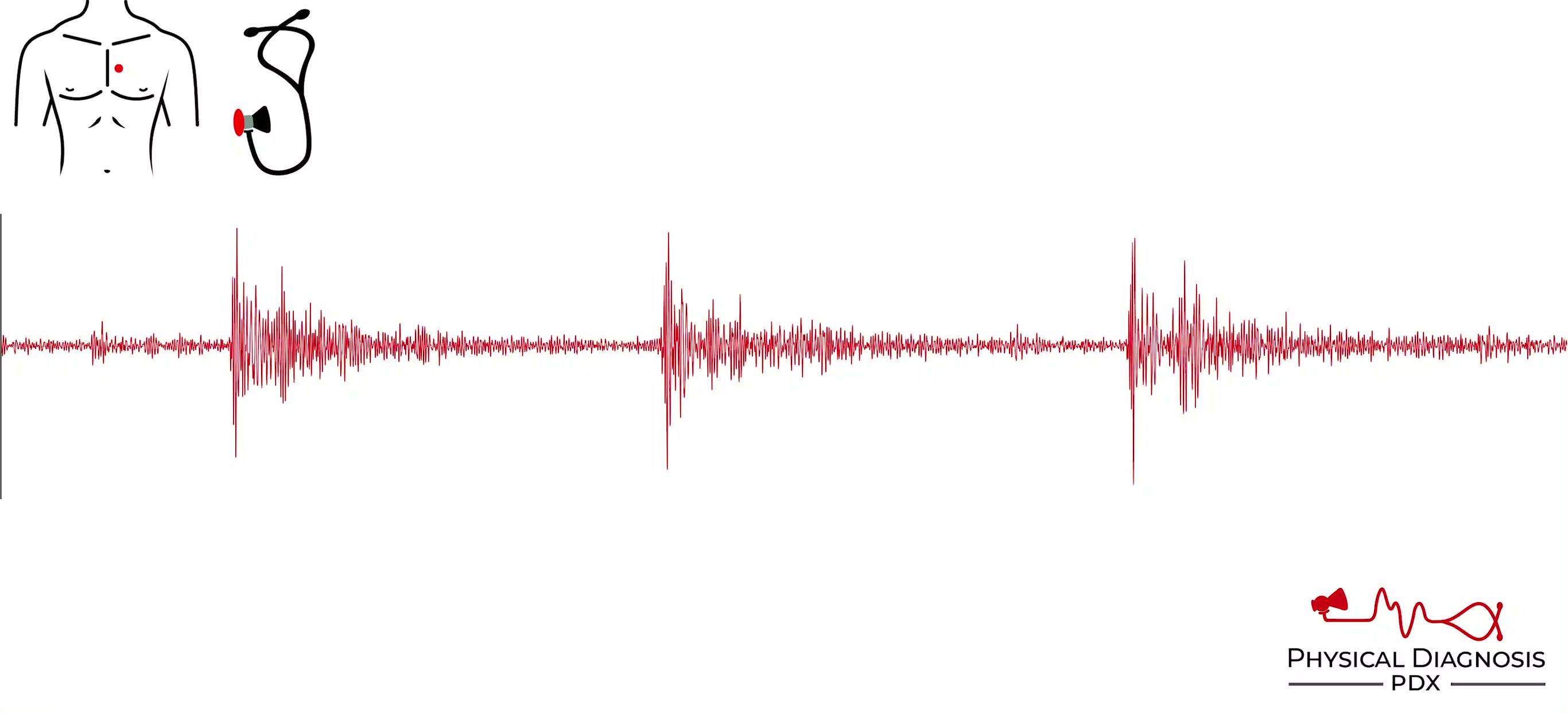
This is an older man with an aortic root aneurysm complicated by moderate to severe aortic regurgitation.

This patient also has Corrigan’s pulse, a bounding peripheral pulse, bisferiens pulse, and de Musset’s sign.

Aortic Regurgitation

Annotated

Aortic Regurgitation

Annotated
This patient also has

Austin Flint Murmur Bounding Pulse Cheyne-Stokes Respirations Corrigan’s Pulse De Musset’s Sign Pulsus bisferiens Traube’s Sign

Related signs

Austin Flint Murmur
Hypertrophic Obstructive Cardiomyopathy (HOCM)

Teaching physical diagnosis through a library of real clinical findings.

  • About
  • Resources
  • Privacy
  • Acknowledgments