Physical Diagnosis PDX
Library
Cardiology Atlas Tutorial
Neurology Atlas Tutorial
Rheumatology Atlas Tutorial
Endocrinology Atlas Tutorial
Gastroenterology Atlas Tutorial
Pulmonology Atlas Tutorial
Infectious Disease Atlas Tutorial
Hematology-Oncology Atlas Tutorial
Nephrology Atlas Tutorial
Nails Atlas Tutorial
Hereditary Atlas Tutorial
Miscellaneous Atlas Tutorial
Cases Lectures Quizzes About
Library

Cardiology

Atlas Tutorial

Neurology

Atlas Tutorial

Rheumatology

Atlas Tutorial

Endocrinology

Atlas Tutorial

Gastroenterology

Atlas Tutorial

Pulmonology

Atlas Tutorial

Infectious Disease

Atlas Tutorial

Hematology-Oncology

Atlas Tutorial

Nephrology

Atlas Tutorial

Nails

Atlas Tutorial

Hereditary

Atlas Tutorial

Miscellaneous

Atlas Tutorial
Cases Lectures Quizzes About
  1. Home
  2. Cardiology
  3. Loud S2

vimeo-463363391--LoudS2_1_LoudP2.mp4

File is not under priv/media.
Patient 1
Clip 1
Annotated Compare
Cardiology Heart Sounds

Loud S2

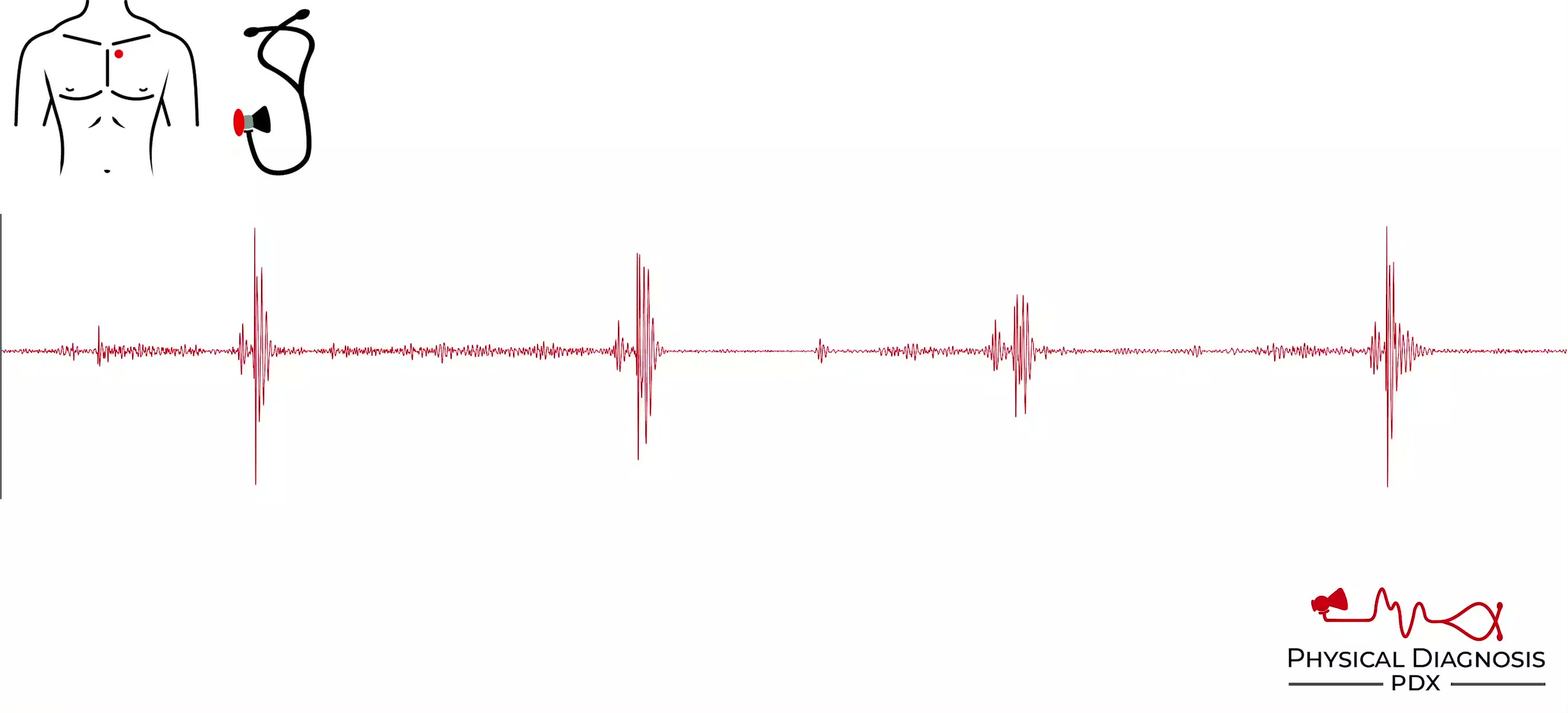
The common causes of a loud S2 include high systemic (A2) or pulmonary (P2) pressures and closure of a prosthetic valve (usually in the aortic position). If the S2 is split, try to decipher which component is loudest. A2 should always be louder than P2, except over the pulmonic area where they may be equal. If P2 is louder than A2 anywhere in the chest, pulmonary hypertension should be suspected. Look for other signs of pulmonary hypertension, such as giant a waves in the jugular venous waveform or the presence of a right ventricular heave.
Card Tutorial

Patient 1

This patient has severe pulmonary hypertension. Note the split S2, with P2 being significantly louder than A2.

Loud S2

Annotated

Loud S1 Mechanical S1

Teaching physical diagnosis through a library of real clinical findings.

  • About
  • Resources
  • Privacy
  • Acknowledgments