Physical Diagnosis PDX
Library
Cardiology Atlas Tutorial
Neurology Atlas Tutorial
Rheumatology Atlas Tutorial
Endocrinology Atlas Tutorial
Gastroenterology Atlas Tutorial
Pulmonology Atlas Tutorial
Infectious Disease Atlas Tutorial
Hematology-Oncology Atlas Tutorial
Nephrology Atlas Tutorial
Nails Atlas Tutorial
Hereditary Atlas Tutorial
Miscellaneous Atlas Tutorial
Cases Lectures Quizzes About
Library

Cardiology

Atlas Tutorial

Neurology

Atlas Tutorial

Rheumatology

Atlas Tutorial

Endocrinology

Atlas Tutorial

Gastroenterology

Atlas Tutorial

Pulmonology

Atlas Tutorial

Infectious Disease

Atlas Tutorial

Hematology-Oncology

Atlas Tutorial

Nephrology

Atlas Tutorial

Nails

Atlas Tutorial

Hereditary

Atlas Tutorial

Miscellaneous

Atlas Tutorial
Cases Lectures Quizzes About
  1. Home
  2. Cardiology
  3. Pericardial Knock

vimeo-651762007--Annotated_PericardialKnock_9.mp4

File is not under priv/media.
Patient 1 Patient 2 Patient 3
Clip 1 Clip 2 Clip 3
Raw Compare
Previous patient Previous clip
Cardiology Heart Sounds

Pericardial Knock

The pericardial knock is a loud, high pitched sound in early diastole that occurs in patients with constrictive pericarditis. It is the result of rapid deceleration of blood due to the inelastic pericardium. It occurs well outside the range for a split S2, and the opening snap of mitral stenosis, but not as far from S2 as an S3. In patients with suspected constrictive pericarditis, try to identify a constellation of supportive physical findings, including Kussmaul’s sign, Friedreich’s sign, the W sign, and the pericardial knock.
Card Tutorial

Patient 3

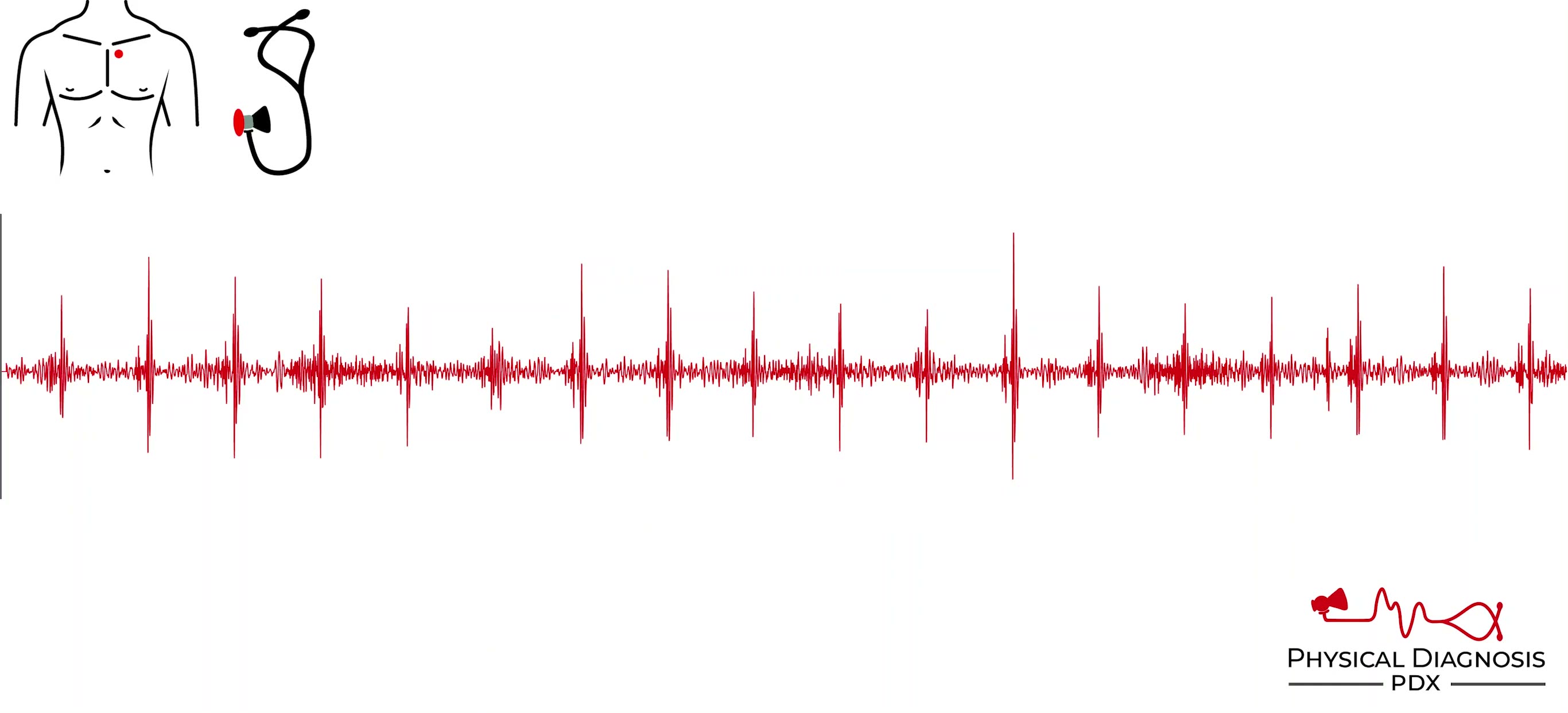
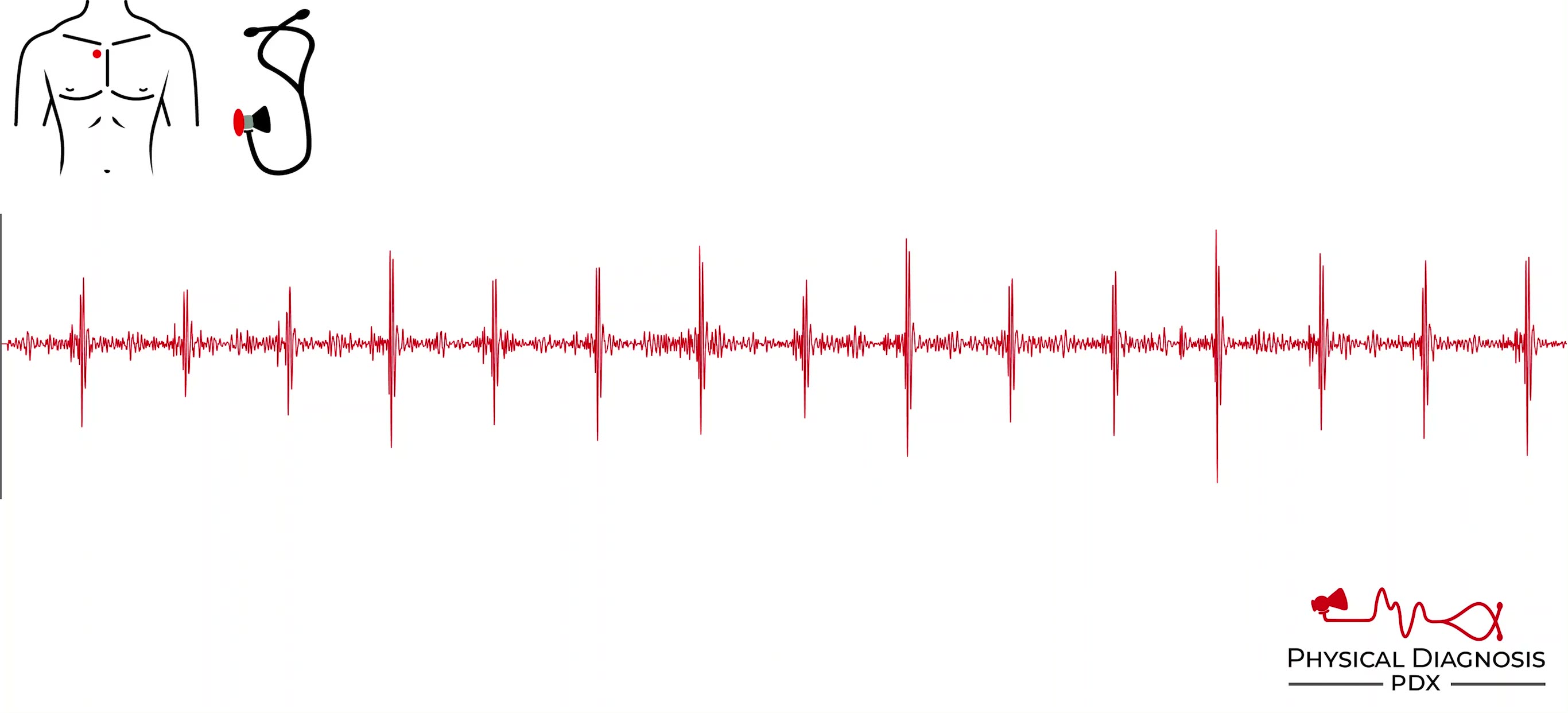
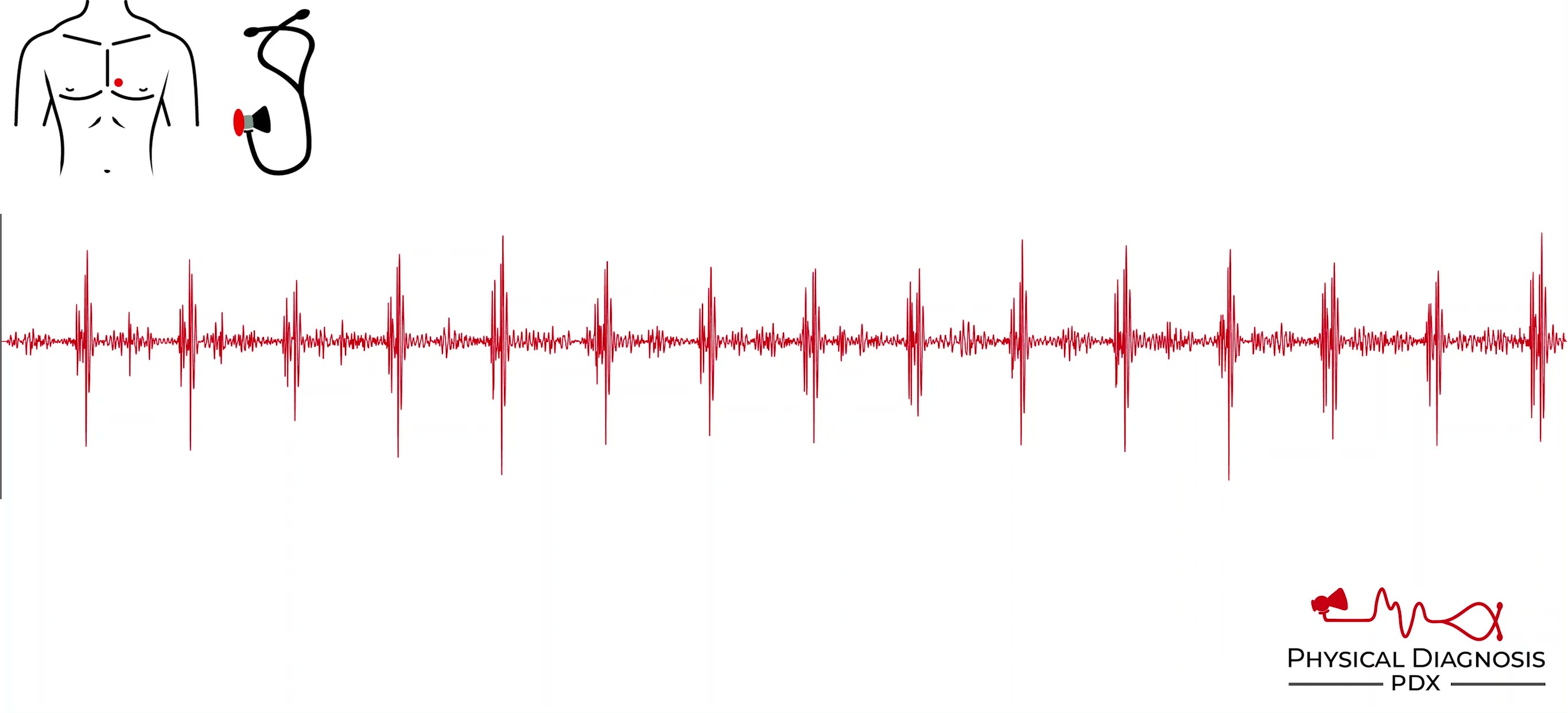
This is an older woman with Hodgkin’s lymphoma and breast cancer who had radiation therapy to chest and later developed valvular heart disease. We suspect that she may have constrictive pericarditis. This extra sound is heard just after S2, and is best appreciated with the diaphragm of the stethoscope along the left sternal border. It could also be a split S2. However, arguing against the split S2 is the fact that the extra sound is not heard in the aortic area (would expect a split S2 over that area) and the sounds are heard a bit too far apart.

Pericardial Friction Rub Physiologically Split S2

Teaching physical diagnosis through a library of real clinical findings.

  • About
  • Resources
  • Privacy
  • Acknowledgments