Physical Diagnosis PDX
Library
Cardiology Atlas Tutorial
Neurology Atlas Tutorial
Rheumatology Atlas Tutorial
Endocrinology Atlas Tutorial
Gastroenterology Atlas Tutorial
Pulmonology Atlas Tutorial
Infectious Disease Atlas Tutorial
Hematology-Oncology Atlas Tutorial
Nephrology Atlas Tutorial
Nails Atlas Tutorial
Hereditary Atlas Tutorial
Miscellaneous Atlas Tutorial
Cases Lectures Quizzes About
Library

Cardiology

Atlas Tutorial

Neurology

Atlas Tutorial

Rheumatology

Atlas Tutorial

Endocrinology

Atlas Tutorial

Gastroenterology

Atlas Tutorial

Pulmonology

Atlas Tutorial

Infectious Disease

Atlas Tutorial

Hematology-Oncology

Atlas Tutorial

Nephrology

Atlas Tutorial

Nails

Atlas Tutorial

Hereditary

Atlas Tutorial

Miscellaneous

Atlas Tutorial
Cases Lectures Quizzes About
  1. Home
  2. Cardiology
  3. Pericardial Knock

vimeo-463375430--Annotated_PericardialKnock_6.mp4

File is not under priv/media.
Patient 1 Patient 2 Patient 3
Clip 1 Clip 2
Raw Compare
Previous patient Next patient Next clip
Cardiology Heart Sounds

Pericardial Knock

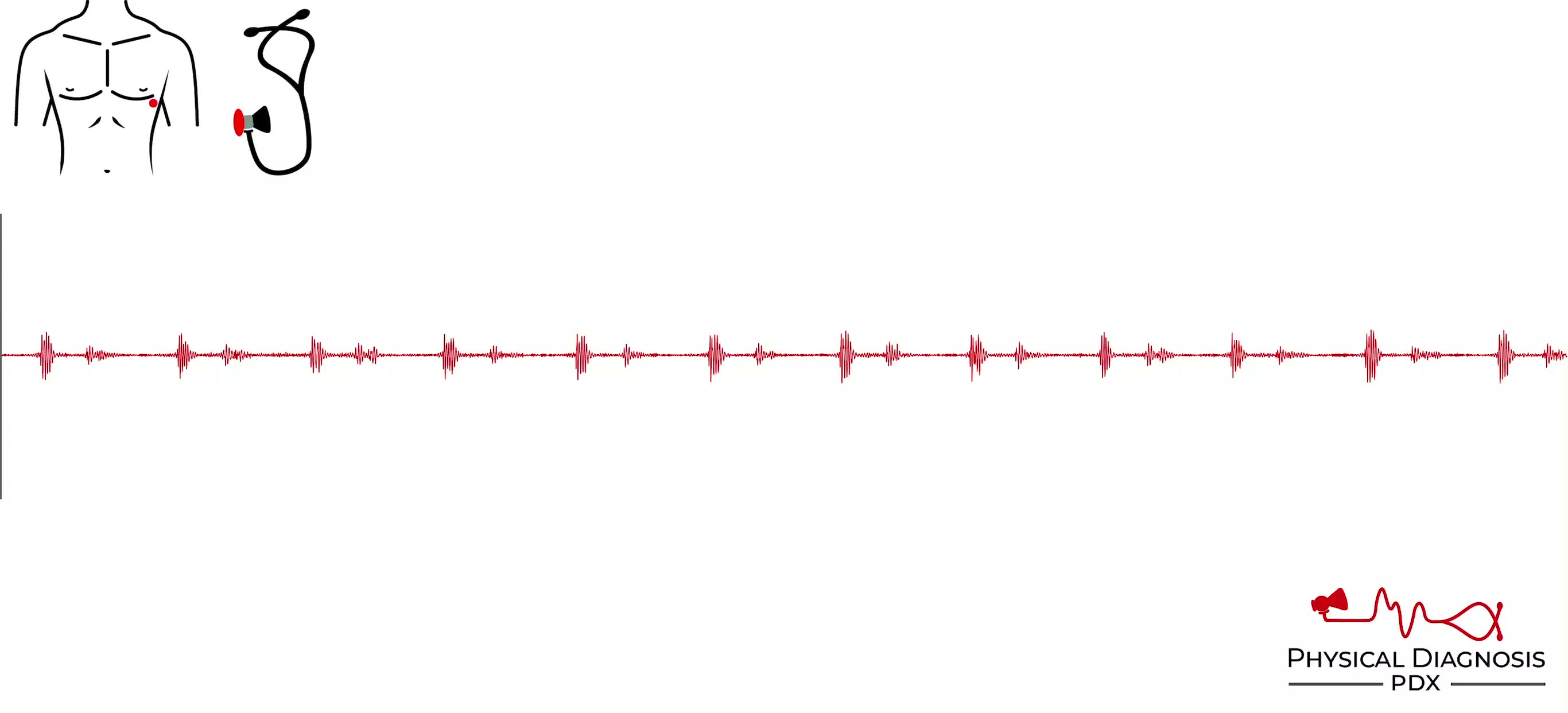
The pericardial knock is a loud, high pitched sound in early diastole that occurs in patients with constrictive pericarditis. It is the result of rapid deceleration of blood due to the inelastic pericardium. It occurs well outside the range for a split S2, and the opening snap of mitral stenosis, but not as far from S2 as an S3. In patients with suspected constrictive pericarditis, try to identify a constellation of supportive physical findings, including Kussmaul’s sign, Friedreich’s sign, the W sign, and the pericardial knock.
Card Tutorial

Patient 2

A middle-aged woman was admitted to the hospital with exertion dyspnea six months after an episode of acute pericarditis caused by anterior chest wall trauma related to a boogie boarding accident. She was found to have a pericardial knock on examination, as well as other evidence of constrictive pericarditis.

Pericardial Knock

Annotated

Pericardial Knock

Pericardial Friction Rub Physiologically Split S2

Teaching physical diagnosis through a library of real clinical findings.

  • About
  • Resources
  • Privacy
  • Acknowledgments