Physical Diagnosis PDX
Library
Cardiology Atlas Tutorial
Neurology Atlas Tutorial
Rheumatology Atlas Tutorial
Endocrinology Atlas Tutorial
Gastroenterology Atlas Tutorial
Pulmonology Atlas Tutorial
Infectious Disease Atlas Tutorial
Hematology-Oncology Atlas Tutorial
Nephrology Atlas Tutorial
Nails Atlas Tutorial
Hereditary Atlas Tutorial
Miscellaneous Atlas Tutorial
Cases Lectures Quizzes About
Library

Cardiology

Atlas Tutorial

Neurology

Atlas Tutorial

Rheumatology

Atlas Tutorial

Endocrinology

Atlas Tutorial

Gastroenterology

Atlas Tutorial

Pulmonology

Atlas Tutorial

Infectious Disease

Atlas Tutorial

Hematology-Oncology

Atlas Tutorial

Nephrology

Atlas Tutorial

Nails

Atlas Tutorial

Hereditary

Atlas Tutorial

Miscellaneous

Atlas Tutorial
Cases Lectures Quizzes About
  1. Home
  2. Cardiology
  3. Pulsus Paradoxus

Pulsus-Paradoxus_Tamponade.mp4

File is not under priv/media.
Patient 1
Clip 1
Cardiology Arterial Pulses

Pulsus Paradoxus

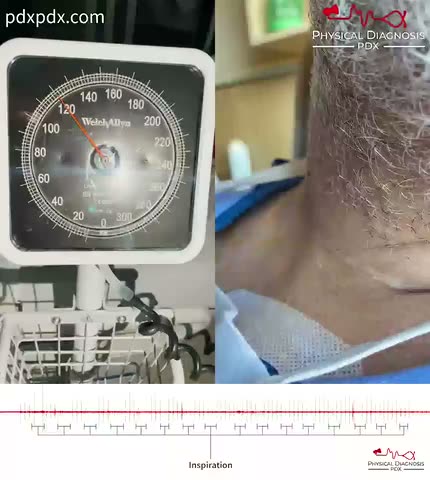
A decrease in SBP >10 mmHg during inspiration. Consistent with cardiac tamponade or acute asthma attack.

Patient 1:

This is an older man with effusive-constrictive pericardial disease who developed presyncope and hypotension and was found to have a positive pulsus paradoxus. Note the first Korotkoff sounds at ~ 100 mm Hg, but the sounds are only present during expiration when blood pressure is higher (blood pressure A). The sounds are audible throughout both expiration and inspiration starting around 74 mm Hg (blood pressure B). The difference between blood pressure A and blood pressure B (28 mm Hg) is the pulsus.

https://physicaldiagnosispdx.com/wp-content/uploads/Pulsus-Paradoxus_Tamponade.mp4

Embedded media

  • html5-video url: https://physicaldiagnosispdx.com/wp-content/uploads/Pulsus-Paradoxus_Tamponade.mp4?_=1
    local: media/videos/Pulsus-Paradoxus_Tamponade.mp4

Patient 1

A decrease in SBP >10 mmHg during inspiration. Consistent with cardiac tamponade or acute asthma attack.

Patient 1:

This is an older man with effusive-constrictive pericardial disease who developed presyncope and hypotension and was found to have a positive pulsus paradoxus. Note the first Korotkoff sounds at ~ 100 mm Hg, but the sounds are only present during expiration when blood pressure is higher (blood pressure A). The sounds are audible throughout both expiration and inspiration starting around 74 mm Hg (blood pressure B). The difference between blood pressure A and blood pressure B (28 mm Hg) is the pulsus.

https://physicaldiagnosispdx.com/wp-content/uploads/Pulsus-Paradoxus_Tamponade.mp4

Corrigan’s Pulse Pulsus bisferiens

Teaching physical diagnosis through a library of real clinical findings.

  • About
  • Resources
  • Privacy
  • Acknowledgments