Physical Diagnosis PDX
Library
Cardiology Atlas Tutorial
Neurology Atlas Tutorial
Rheumatology Atlas Tutorial
Endocrinology Atlas Tutorial
Gastroenterology Atlas Tutorial
Pulmonology Atlas Tutorial
Infectious Disease Atlas Tutorial
Hematology-Oncology Atlas Tutorial
Nephrology Atlas Tutorial
Nails Atlas Tutorial
Hereditary Atlas Tutorial
Miscellaneous Atlas Tutorial
Cases Lectures Quizzes About
Library

Cardiology

Atlas Tutorial

Neurology

Atlas Tutorial

Rheumatology

Atlas Tutorial

Endocrinology

Atlas Tutorial

Gastroenterology

Atlas Tutorial

Pulmonology

Atlas Tutorial

Infectious Disease

Atlas Tutorial

Hematology-Oncology

Atlas Tutorial

Nephrology

Atlas Tutorial

Nails

Atlas Tutorial

Hereditary

Atlas Tutorial

Miscellaneous

Atlas Tutorial
Cases Lectures Quizzes About
  1. Home
  2. Cardiology
  3. Venous Hum

vimeo-699219577--Annotated_VenousHum_7.mp4

File is not under priv/media.
Patient 1 Patient 2
Clip 1 Clip 2
Raw Compare
Previous patient Previous clip
Cardiology Murmurs

Venous Hum

  • Often heard in children.
  • Etiology is thought to be compression of the internal jugular vein by the transverse process of the atlas.
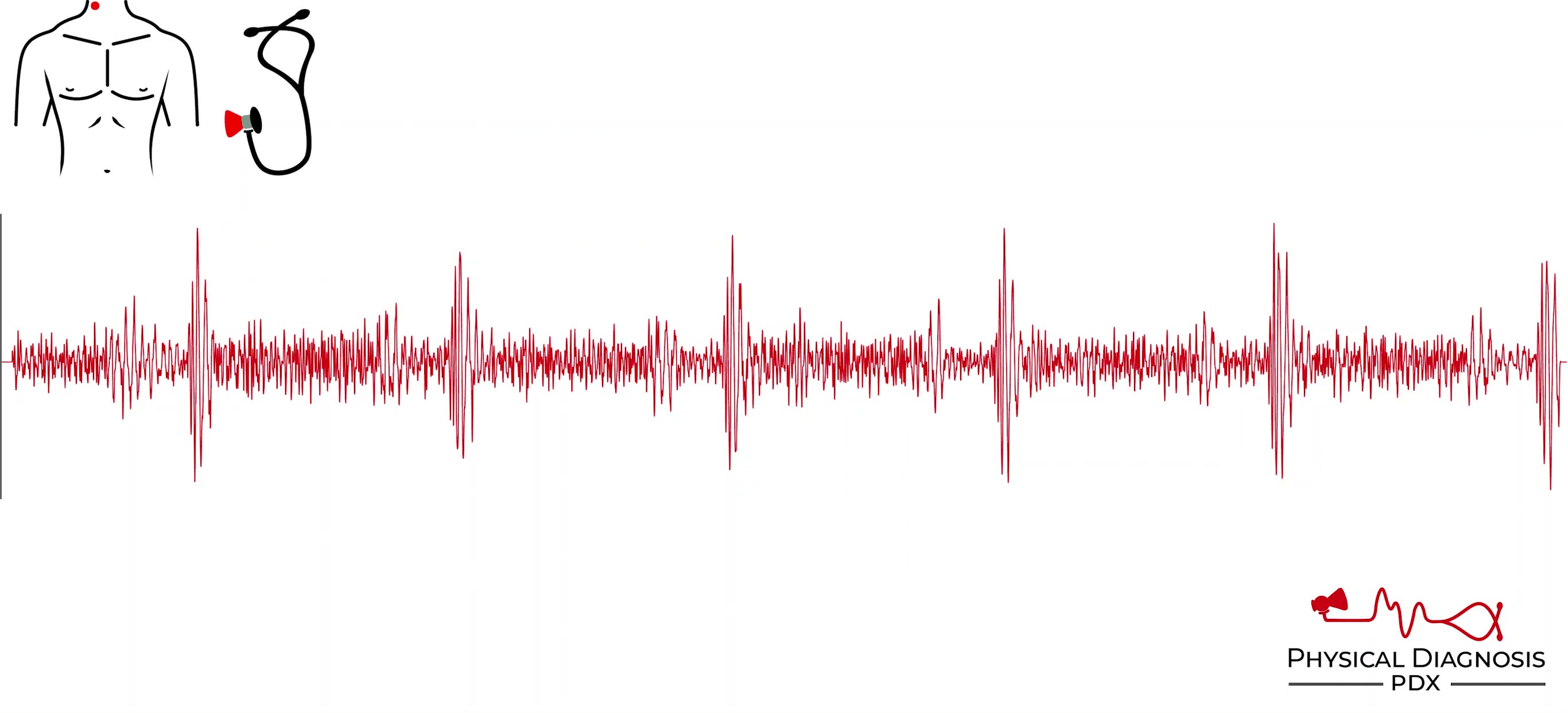
  • The sound is continuous, loudest in diastole.
  • Best heard in the neck, in the anterior triangle, on the right side.
  • Louder when the patient is upright, inspires, or turns away from the stethoscope (to the left).
  • Quieter when lying down or by turning the head towards the stethoscope or with light pressure on the internal jugular vein.
  • It can also be heard in adults with high output states, and is of no clinical significance except that it can be mistaken for a PDA or AV fistula.

Card Tutorial

Patient 2

This is a young and healthy team volunteer who has a venous hum.

Venous Hum

Annotated

Tricuspid Stenosis Ventricular Septal Defect

Teaching physical diagnosis through a library of real clinical findings.

  • About
  • Resources
  • Privacy
  • Acknowledgments