Physical Diagnosis PDX
Library
Cardiology Atlas Tutorial
Neurology Atlas Tutorial
Rheumatology Atlas Tutorial
Endocrinology Atlas Tutorial
Gastroenterology Atlas Tutorial
Pulmonology Atlas Tutorial
Infectious Disease Atlas Tutorial
Hematology-Oncology Atlas Tutorial
Nephrology Atlas Tutorial
Nails Atlas Tutorial
Hereditary Atlas Tutorial
Miscellaneous Atlas Tutorial
Cases Lectures Quizzes About
Library

Cardiology

Atlas Tutorial

Neurology

Atlas Tutorial

Rheumatology

Atlas Tutorial

Endocrinology

Atlas Tutorial

Gastroenterology

Atlas Tutorial

Pulmonology

Atlas Tutorial

Infectious Disease

Atlas Tutorial

Hematology-Oncology

Atlas Tutorial

Nephrology

Atlas Tutorial

Nails

Atlas Tutorial

Hereditary

Atlas Tutorial

Miscellaneous

Atlas Tutorial
Cases Lectures Quizzes About
  1. Home
  2. Neurology
  3. Afferent Pupillary Defect

vimeo-472433916--Afferent_Pupillary_Defect.mp4

File is not under priv/media.
Patient 1
Clip 1
Neurology Cranial Nerves

Afferent Pupillary Defect

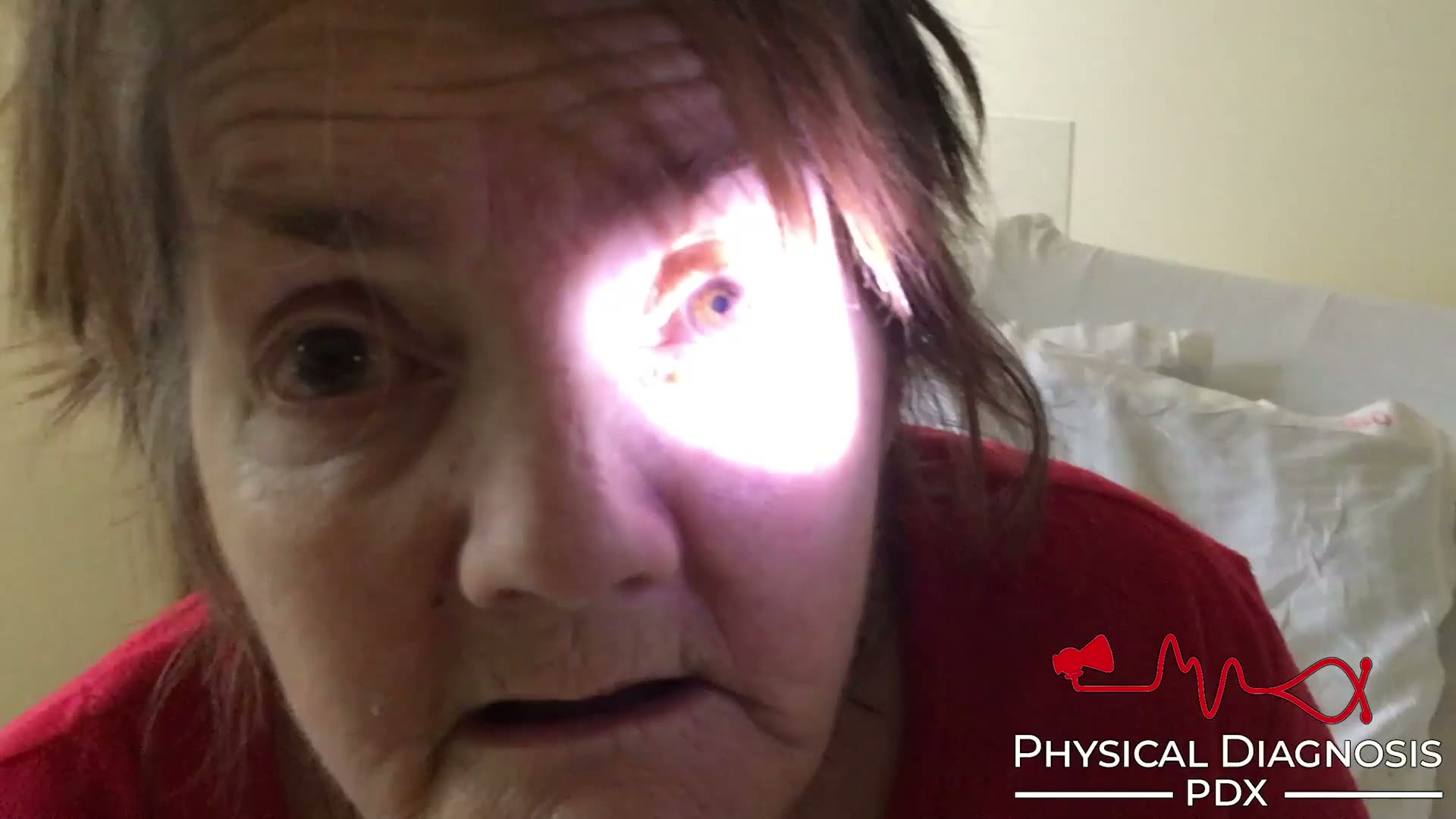
This is the most common pupil defect, characterized by asymmetric pupillary constriction to light, but these pupils are equal (no anisocoria). Main etiology is optic neuritis, but other diseases of the optic nerve or retina may cause it. The swinging flashlight test is performed by shining a light for 1-2 seconds in one eye and then moving the light to the other. Have the patient look at a distant object to not cause confounding pupil constriction due to accommodation. Normally, the direct and consensual responses are equal but in diseases of the optic nerve or retina, the direct response is less than normal, so that when the light passes from the “good” eye, rather than constriction one will see a slight, paradoxical dilation of the pupil, as the perceived light is dimmer than in the good eye, and the consensual response will also be decreased symmetrically. The consensual response in the affected eye, however, is intact, so when light is shone in the good eye, even the bad eye constricts normally (since the consensual response is independent of the optic nerve and retina from the bad eye)

Patient 1

This patient is an old woman with a history of multiple strokes who was admitted with confusion.

Horner’s Syndrome

Teaching physical diagnosis through a library of real clinical findings.

  • About
  • Resources
  • Privacy
  • Acknowledgments