Physical Diagnosis PDX
Library
Cardiology Atlas Tutorial
Neurology Atlas Tutorial
Rheumatology Atlas Tutorial
Endocrinology Atlas Tutorial
Gastroenterology Atlas Tutorial
Pulmonology Atlas Tutorial
Infectious Disease Atlas Tutorial
Hematology-Oncology Atlas Tutorial
Nephrology Atlas Tutorial
Nails Atlas Tutorial
Hereditary Atlas Tutorial
Miscellaneous Atlas Tutorial
Cases Lectures Quizzes About
Library

Cardiology

Atlas Tutorial

Neurology

Atlas Tutorial

Rheumatology

Atlas Tutorial

Endocrinology

Atlas Tutorial

Gastroenterology

Atlas Tutorial

Pulmonology

Atlas Tutorial

Infectious Disease

Atlas Tutorial

Hematology-Oncology

Atlas Tutorial

Nephrology

Atlas Tutorial

Nails

Atlas Tutorial

Hereditary

Atlas Tutorial

Miscellaneous

Atlas Tutorial
Cases Lectures Quizzes About
  1. Home
  2. Neurology
  3. Clonus

Clonus-1.mp4

File is not under priv/media.
Patient 1 Patient 2
Clip 1
Previous patient
Neurology Motor Reflexes

Clonus

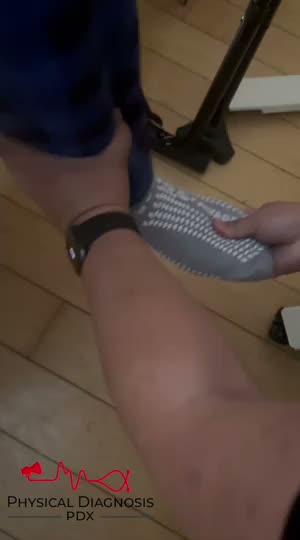
Clonus is the repeating contraction of a stretched muscle. Normally, if a muscle is stretched rapidly, it will contract, which then puts a stretch on the antagonistic muscle, which contracts. For example, rapidly dorsiflexing the ankle stretches the gastrocnemius, causing it to contract, resulting in plantar flexion, which stretches the anterior tibialis, causing dorsiflexion, which stretches the gastrocnemius, which may cause another planar flexion. In UMN disease this process may continue for several beats (non-sustained) or indefinitely (sustained) so long as steady stretch is applied to the gastrocnemius by dorsiflexing the ankle because of disinhibition that normally quells the excessive contractions. To elicit clonus, for example in the ankle, briskly dorsiflex the ankle, and maintain some pressure on the foot.

Neurology tutorial

Patient 2

This is a young man with neurosarcoidosis with right-sided brain lesions corresponding to left-sided hyperreflexia and clonus.

https://physicaldiagnosispdx.com/wp-content/uploads/Clonus-1.mp4

Fasciculations Hoffman’s Sign

Teaching physical diagnosis through a library of real clinical findings.

  • About
  • Resources
  • Privacy
  • Acknowledgments