Physical Diagnosis PDX
Library
Cardiology Atlas Tutorial
Neurology Atlas Tutorial
Rheumatology Atlas Tutorial
Endocrinology Atlas Tutorial
Gastroenterology Atlas Tutorial
Pulmonology Atlas Tutorial
Infectious Disease Atlas Tutorial
Hematology-Oncology Atlas Tutorial
Nephrology Atlas Tutorial
Nails Atlas Tutorial
Hereditary Atlas Tutorial
Miscellaneous Atlas Tutorial
Cases Lectures Quizzes About
Library

Cardiology

Atlas Tutorial

Neurology

Atlas Tutorial

Rheumatology

Atlas Tutorial

Endocrinology

Atlas Tutorial

Gastroenterology

Atlas Tutorial

Pulmonology

Atlas Tutorial

Infectious Disease

Atlas Tutorial

Hematology-Oncology

Atlas Tutorial

Nephrology

Atlas Tutorial

Nails

Atlas Tutorial

Hereditary

Atlas Tutorial

Miscellaneous

Atlas Tutorial
Cases Lectures Quizzes About
  1. Home
  2. Cardiology
  3. Pulsus bisferiens

vimeo-472433660--AR_Bisferiens_Pulse_A.mp4

File is not under priv/media.
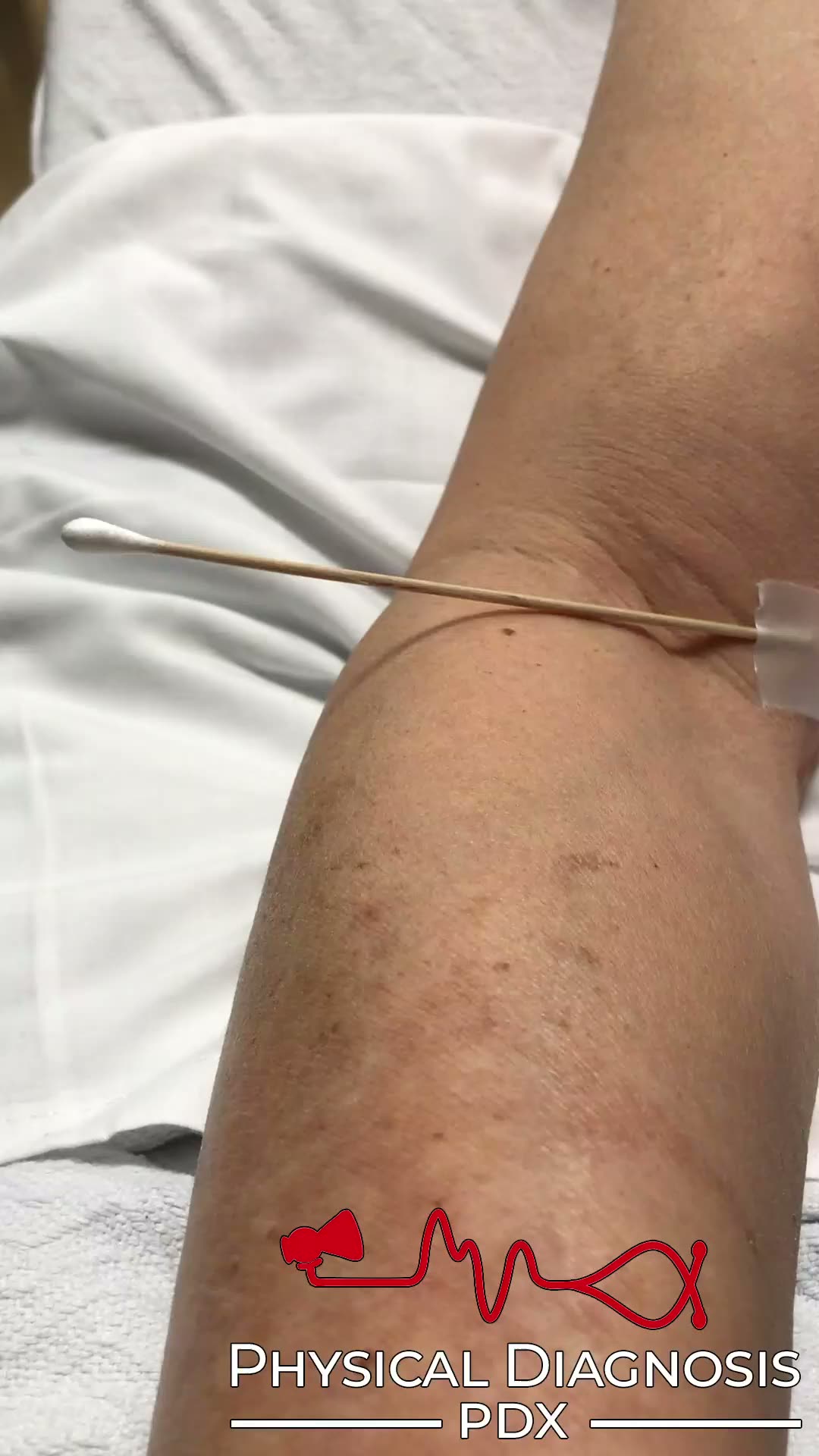
Patient 1
Clip 1
Cardiology Arterial Pulses

Pulsus bisferiens

Pulsus bisferiens describes the presence of an exaggerated “double pulsation” in the arterial pulse. While the arterial pulse is normally dicrotic, consisting of a percussion wave and a tidal wave, the individual waves are not typically visible or palpable at the bedside. The pulse looks and feels like a single wave. When the two waves are discernable at the bedside, it is known as pulsus bisferiens. It is most often associated with the combination of aortic stenosis and aortic regurgitation, but is sometimes seen in patients with pure aortic regurgitation.

Card Tutorial

Patient 1

This is an older man with an aortic root aneurysm complicated by moderate to severe aortic regurgitation. Notice that there is a “double” flicker of the swab, illustrating a “double pulsation” or bisferiens pulse.

This patient also has a decrescendo diastolic murmur over Erb’s point, Corrigan’s pulse, and a bounding peripheral pulse.

This patient also has

Aortic Regurgitation Bounding Pulse Corrigan’s Pulse
Pulsus Paradoxus Radial- Femoral Pulse Delay

Teaching physical diagnosis through a library of real clinical findings.

  • About
  • Resources
  • Privacy
  • Acknowledgments